 I have spent a good many years being rather disdainful of electric vehicles. Not quietly disdainful, either. I have regarded them with the sort of suspicion normally reserved for politicians who promise to lower taxes or people who put pineapple on pizza. The idea of plugging a car into the wall every night, planning road trips around charging stations, and paying a small fortune for the privilege never struck me as progress. It struck me as an elaborate solution to a problem I didn’t have.
Then Subaru came along and complicated matters.
Earlier in my life I had a Subaru Outback in my driveway. I liked it. Quite a lot, actually. It was comfortable, capable, practical, and possessed that wonderfully useful ability to carry an unreasonable amount of luggage while making you feel you could drive to the ends of the earth without giving it a second thought. It was a respectable Outback, in other words. A station wagon with a bit of extra ground clearance and the sort of outdoorsy attitude that suggested it wouldn’t mind getting its shoes dirty.
Then Subaru redesigned the Outback for 2026. And earlier this year they sent me one for a week. Honestly, I looked at it and wondered if someone at the company had been watching National Lampoon’s Vacation one too many times. It now looks like something Clark Griswold might have driven after deciding the families Wagon Queen Family Truckster needed to be taller, bulkier, and capable of surviving a minor meteor strike. It’s a full-blown SUV, and while there’s nothing inherently wrong with that, it doesn’t look like an Outback to me.
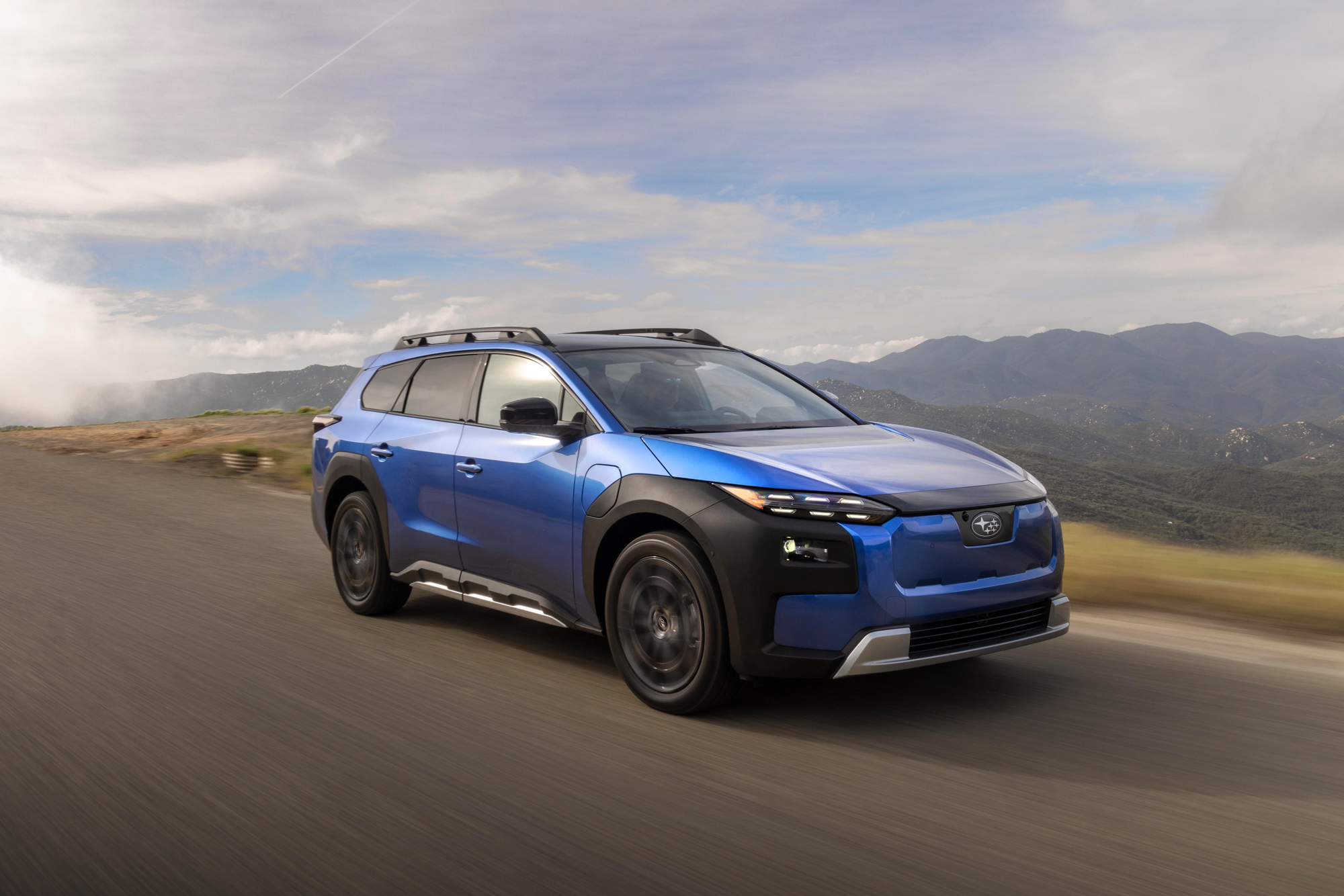
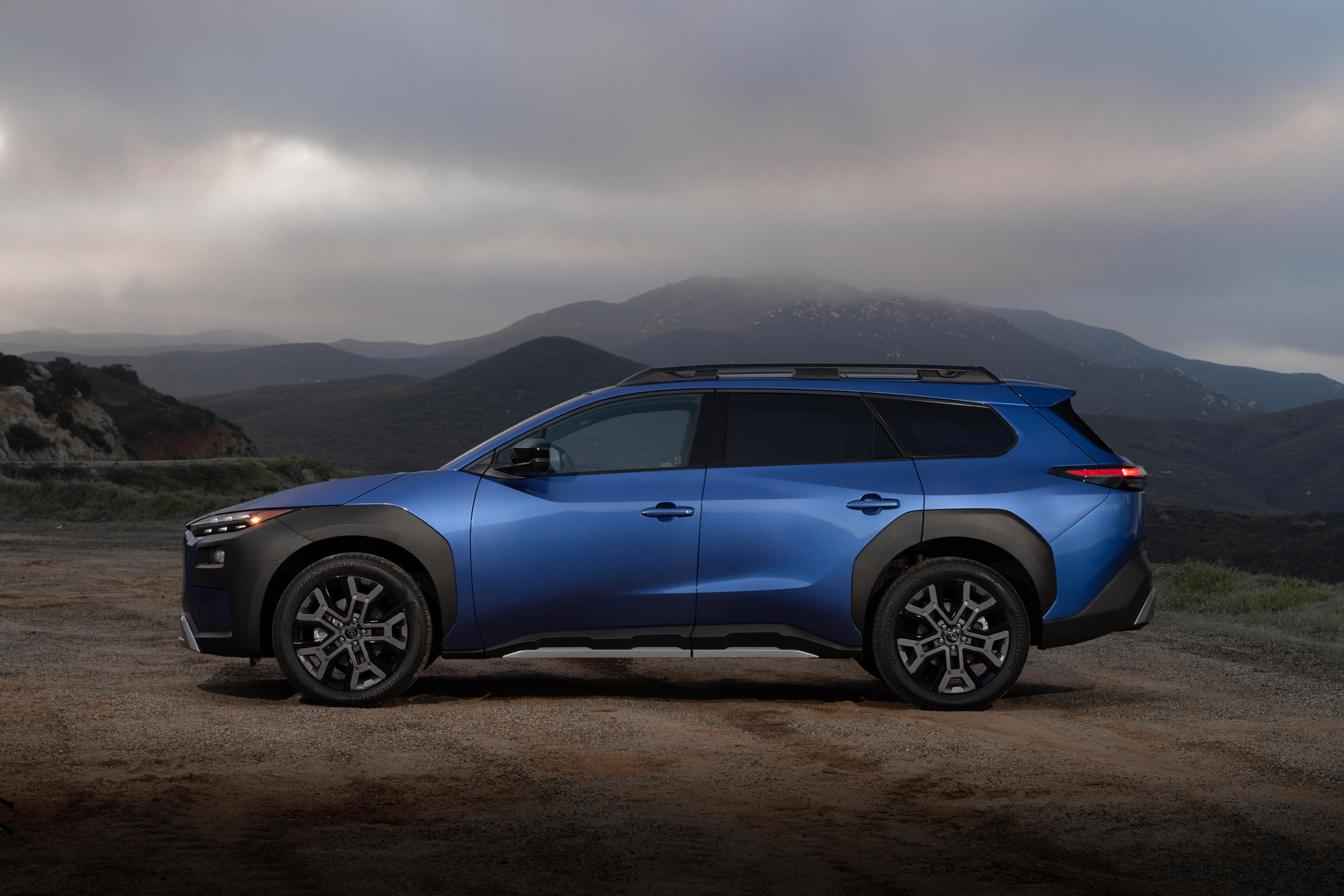
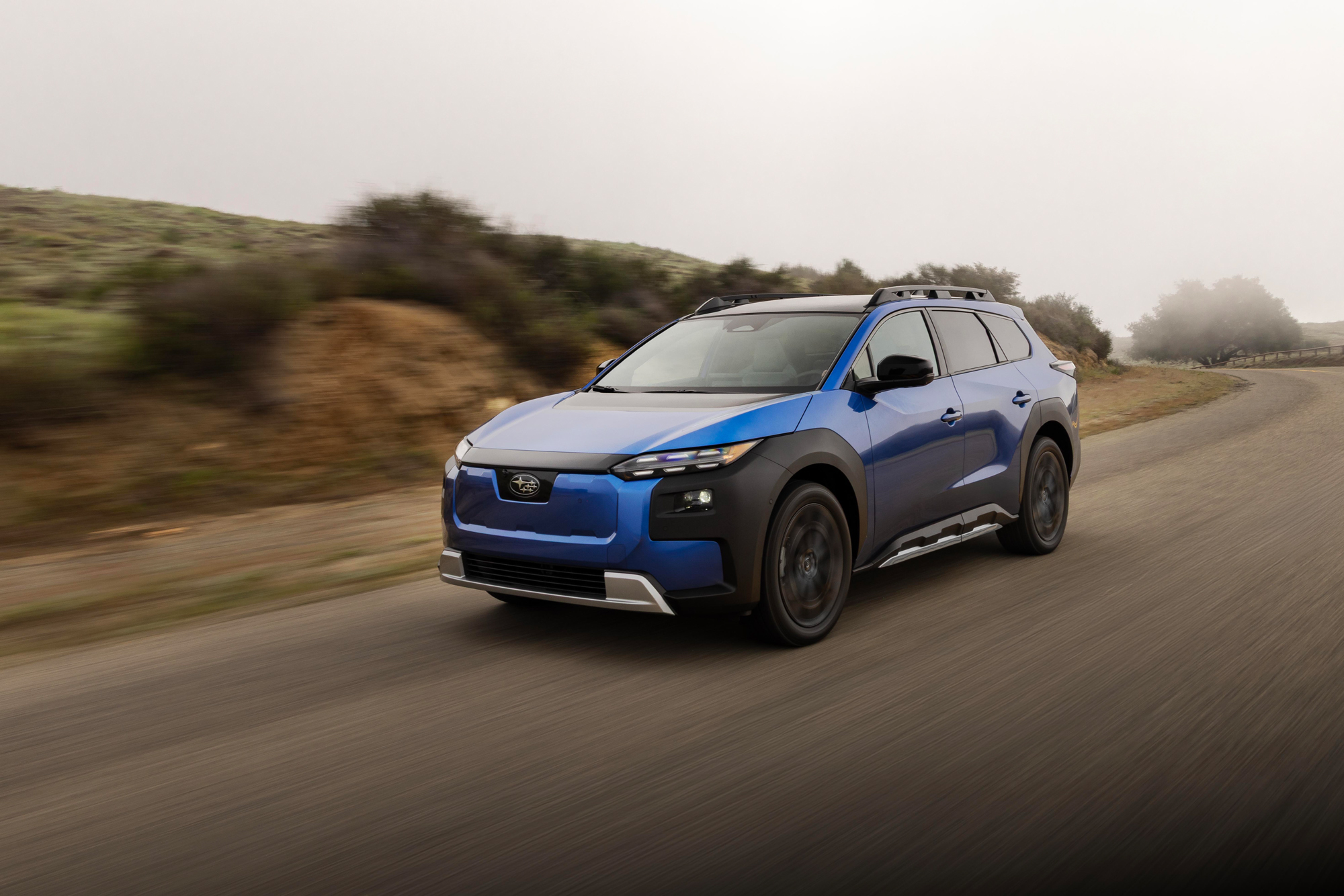
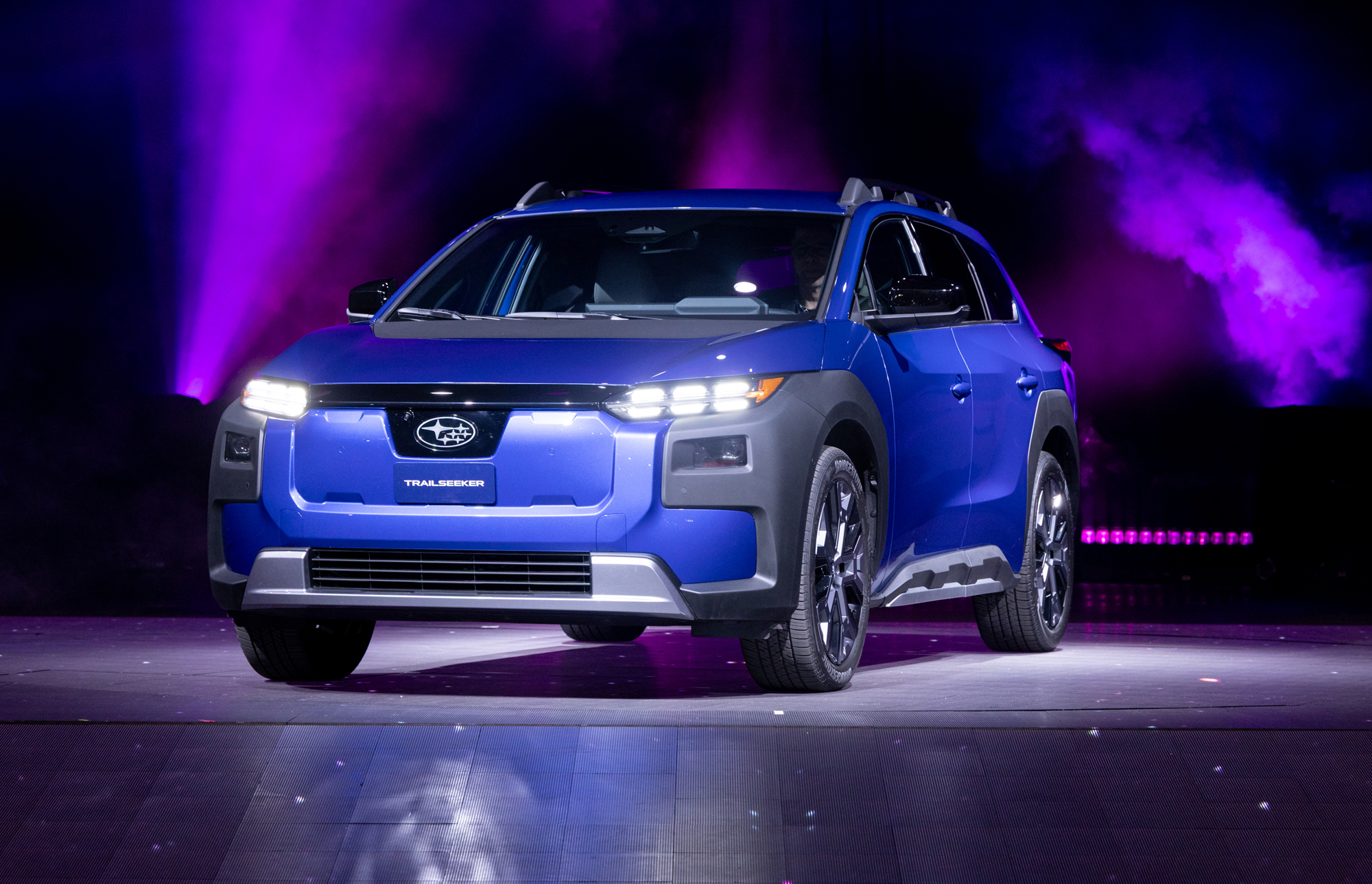
Which brings us to the 2026 Subaru Trailseeker. One of which Subaru delivered to me for a recent week.
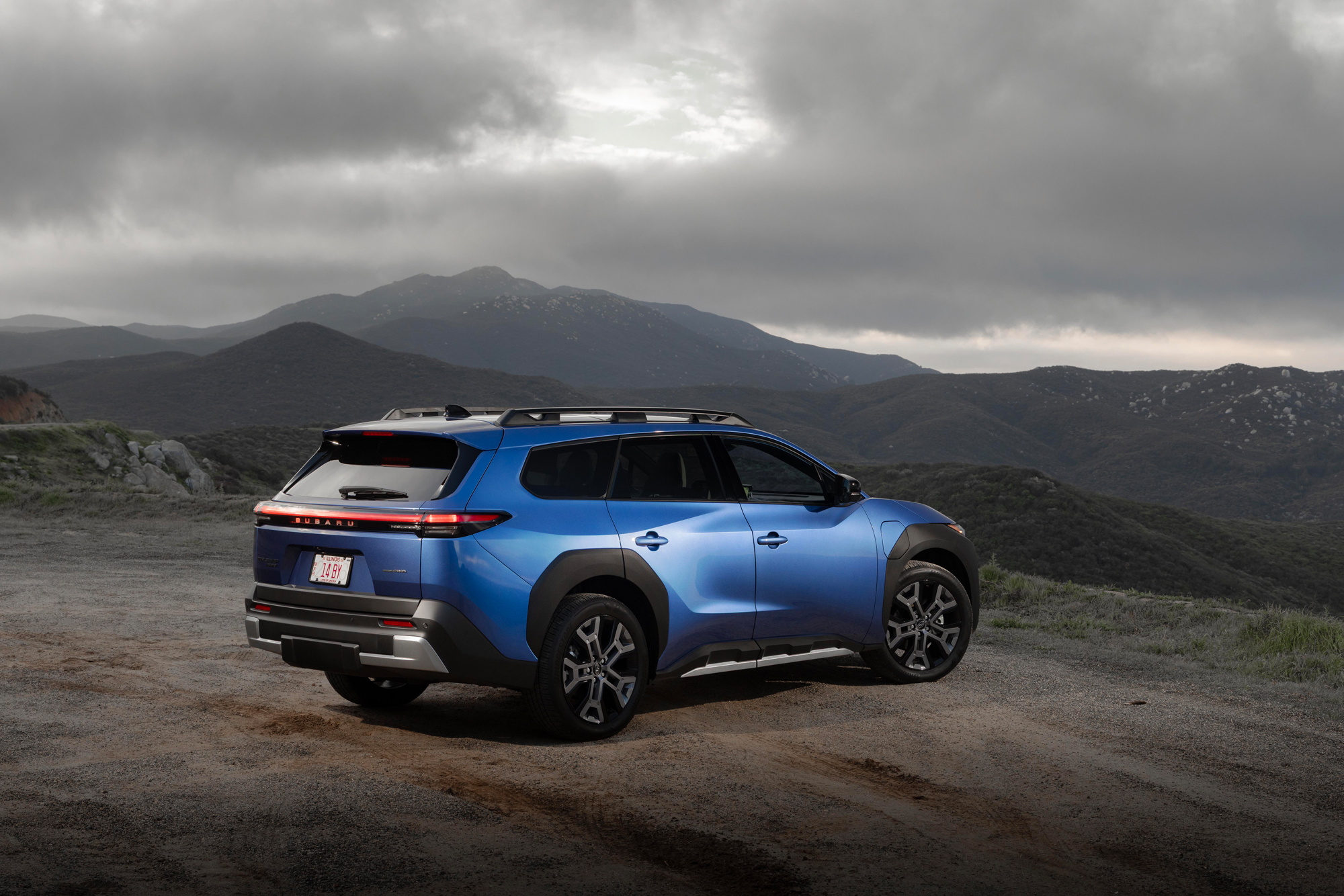
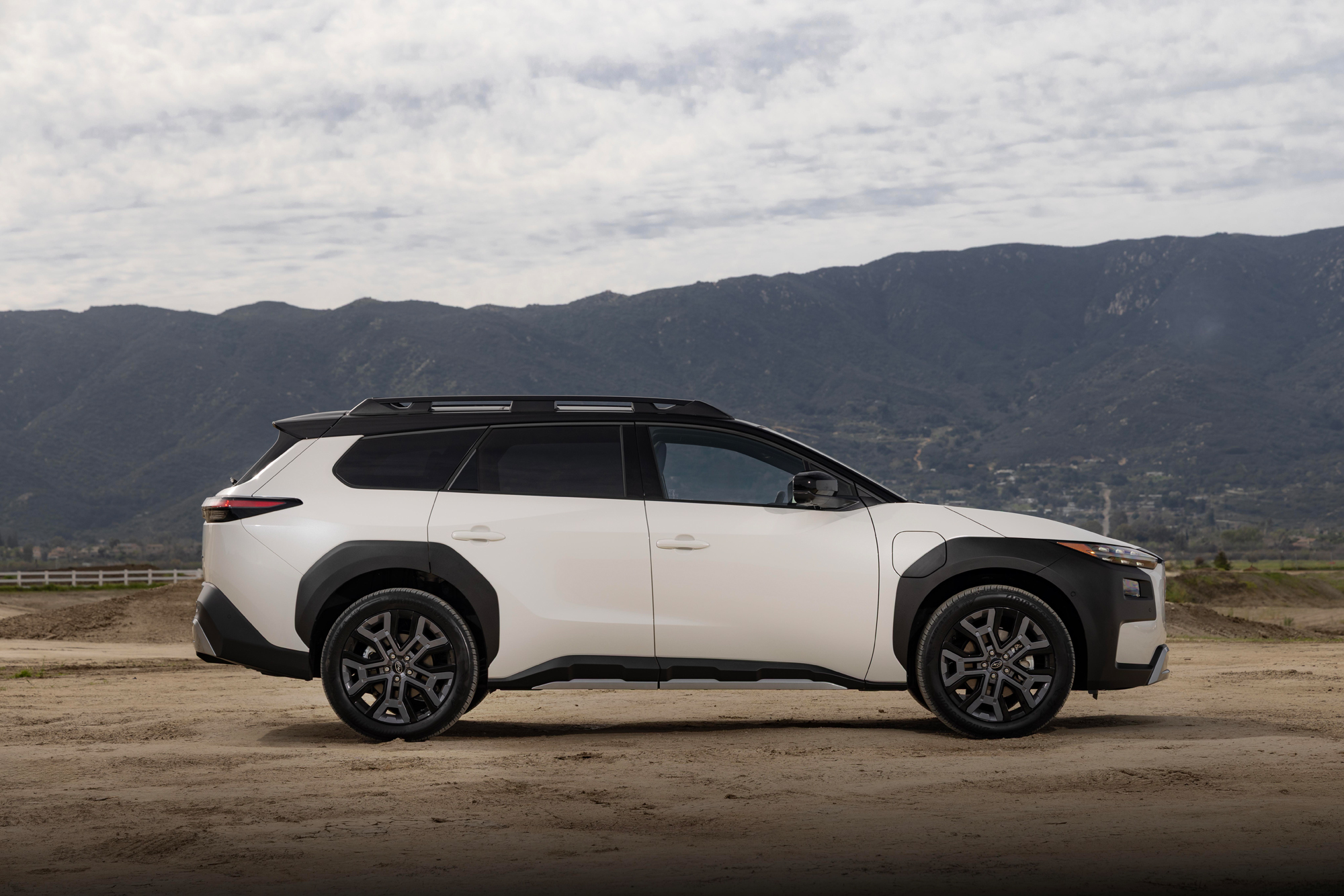
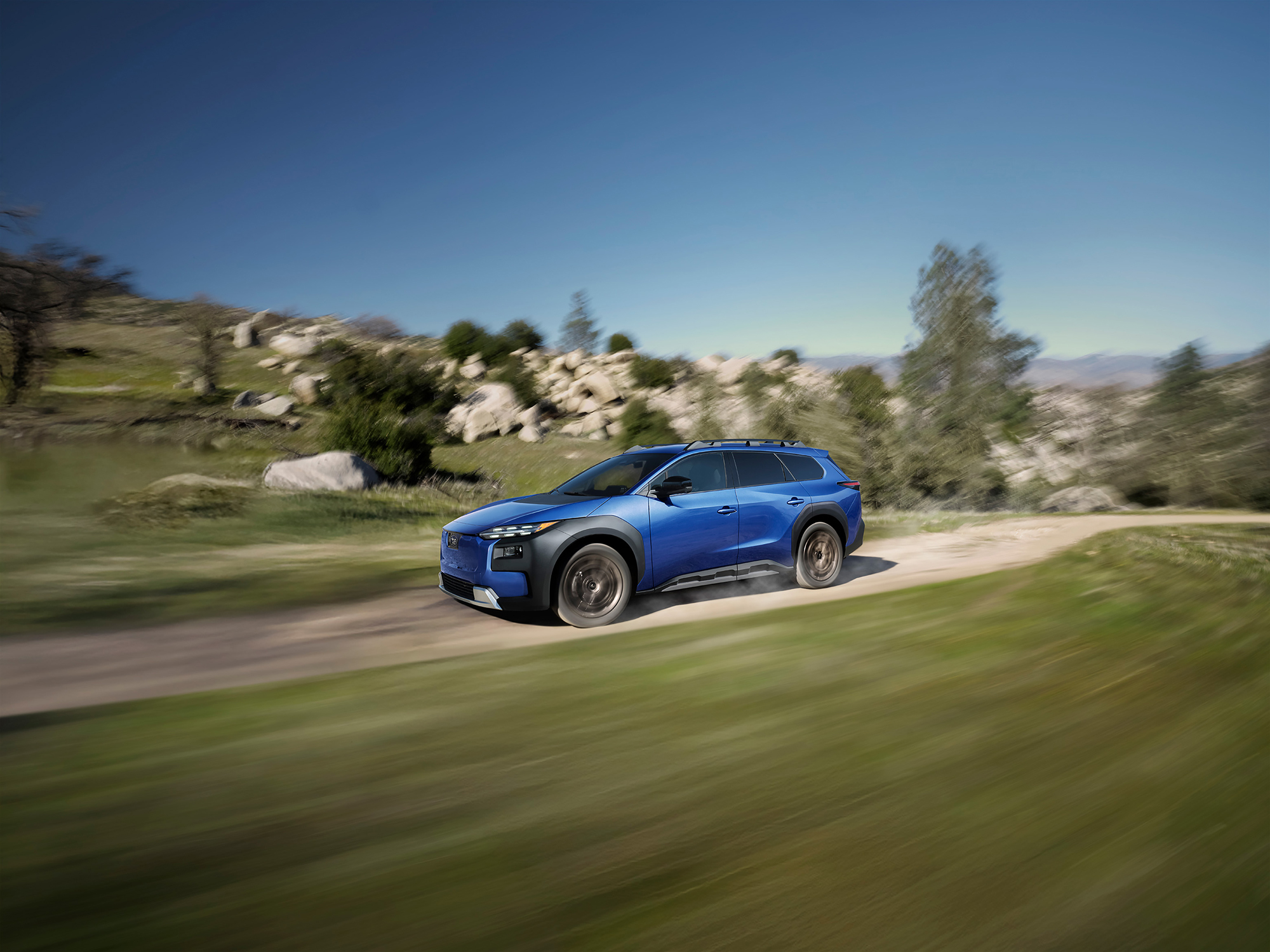
When I first looked at it. really looked at it, there was something sort of oddly familiar. There’s the long roof, the practical rear end, the useful proportions. It looks like an Outback. More like an Outback than the new Outback does, in fact. Subaru has spent years turning its beloved wagon into something increasingly SUV-shaped, then finally turned it into an SUV, only to introduce an entirely new vehicle that looks like the thing it just abandoned.
Automotive logic can be a peculiar beast.
But there’s something else about the Trailseeker that would once have sent me running for the nearest gasoline pump. It’s electric. Not a hybrid, not a plug-in hybrid, not a gasoline engine with a battery helping out when it feels like it. This is an entirely electric Subaru, and it has arrived at precisely the moment I was beginning to think the future of motoring was going to involve an awful lot of me complaining.
And yet, here I am, rather taken with the thing.
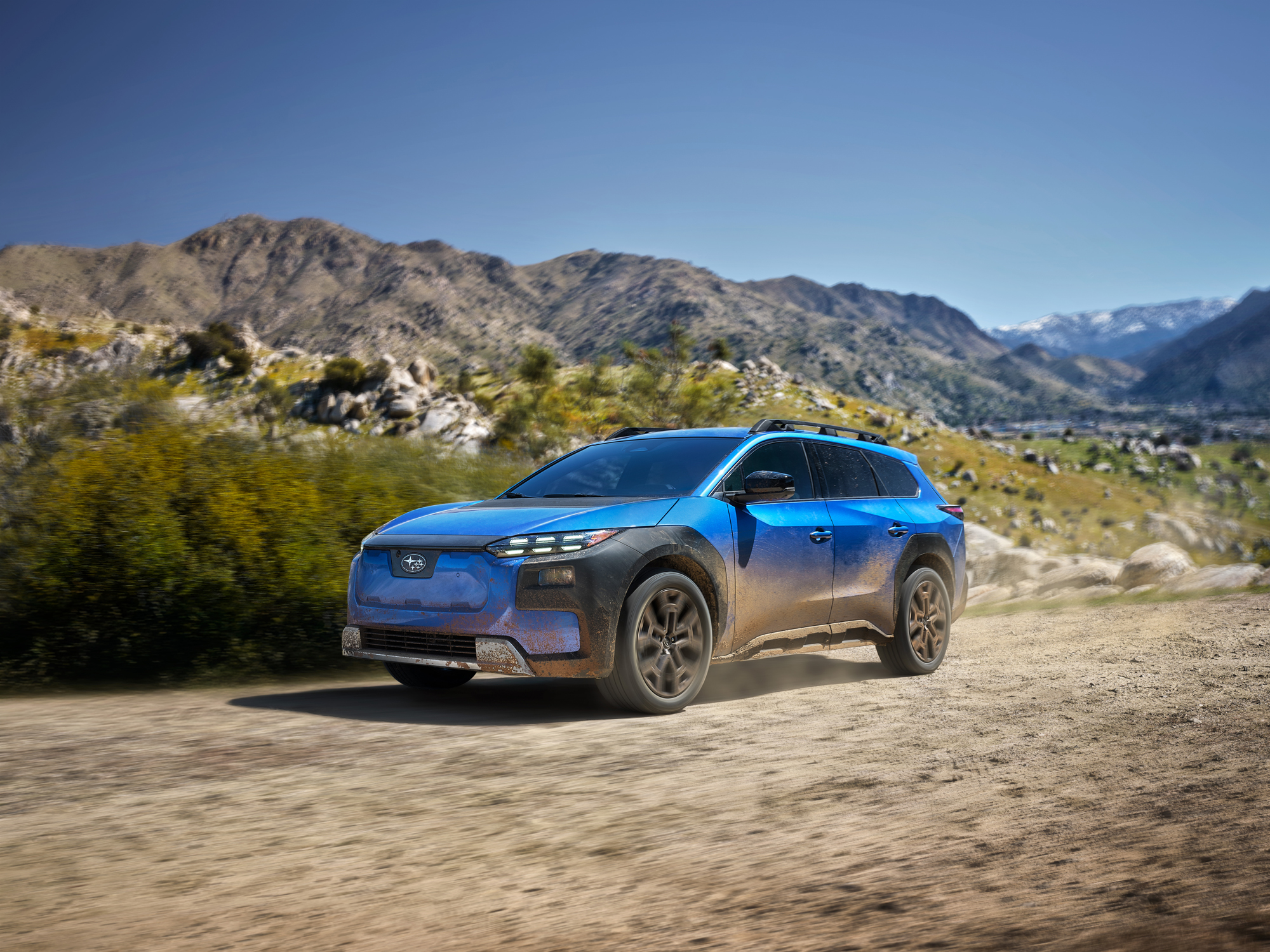
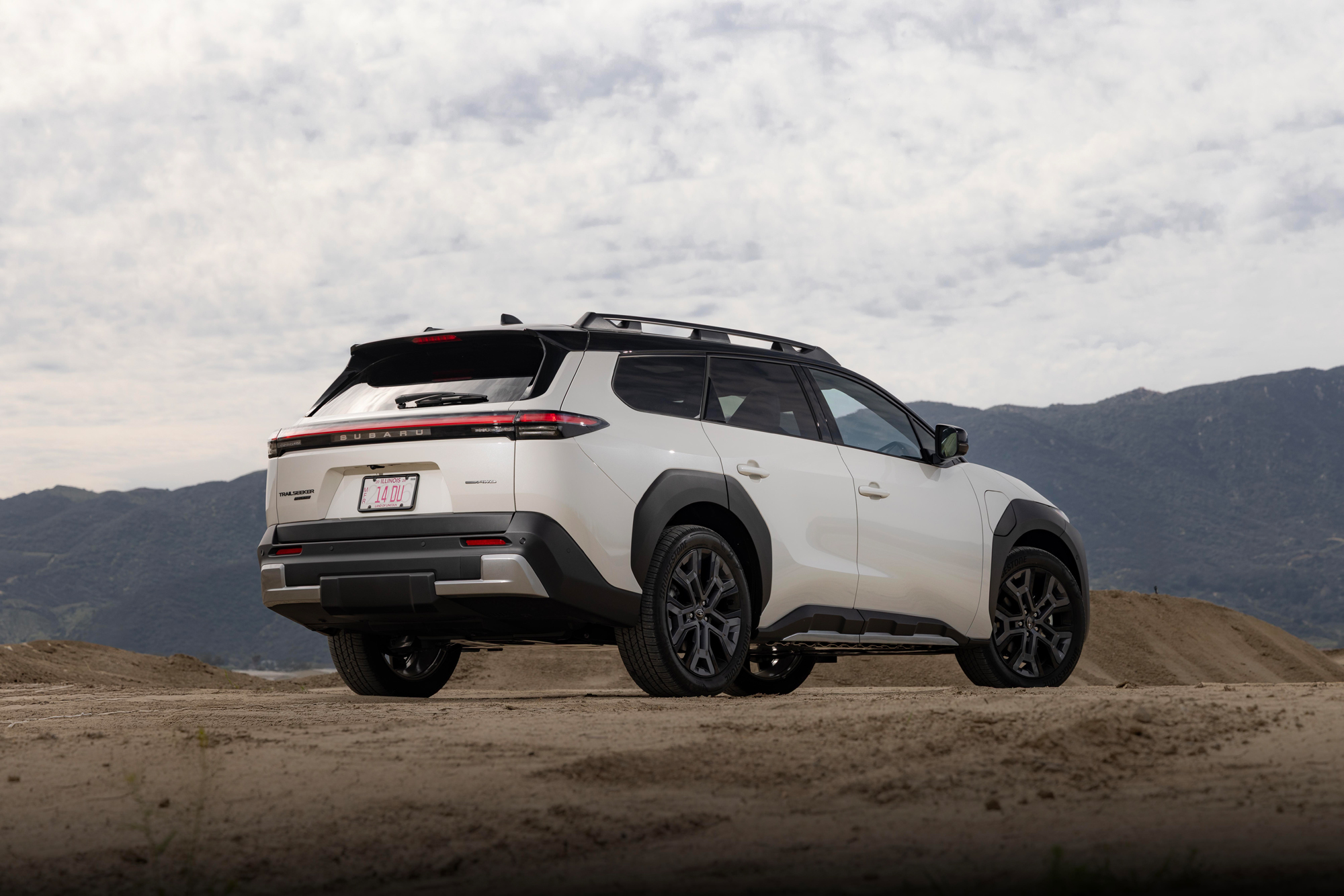
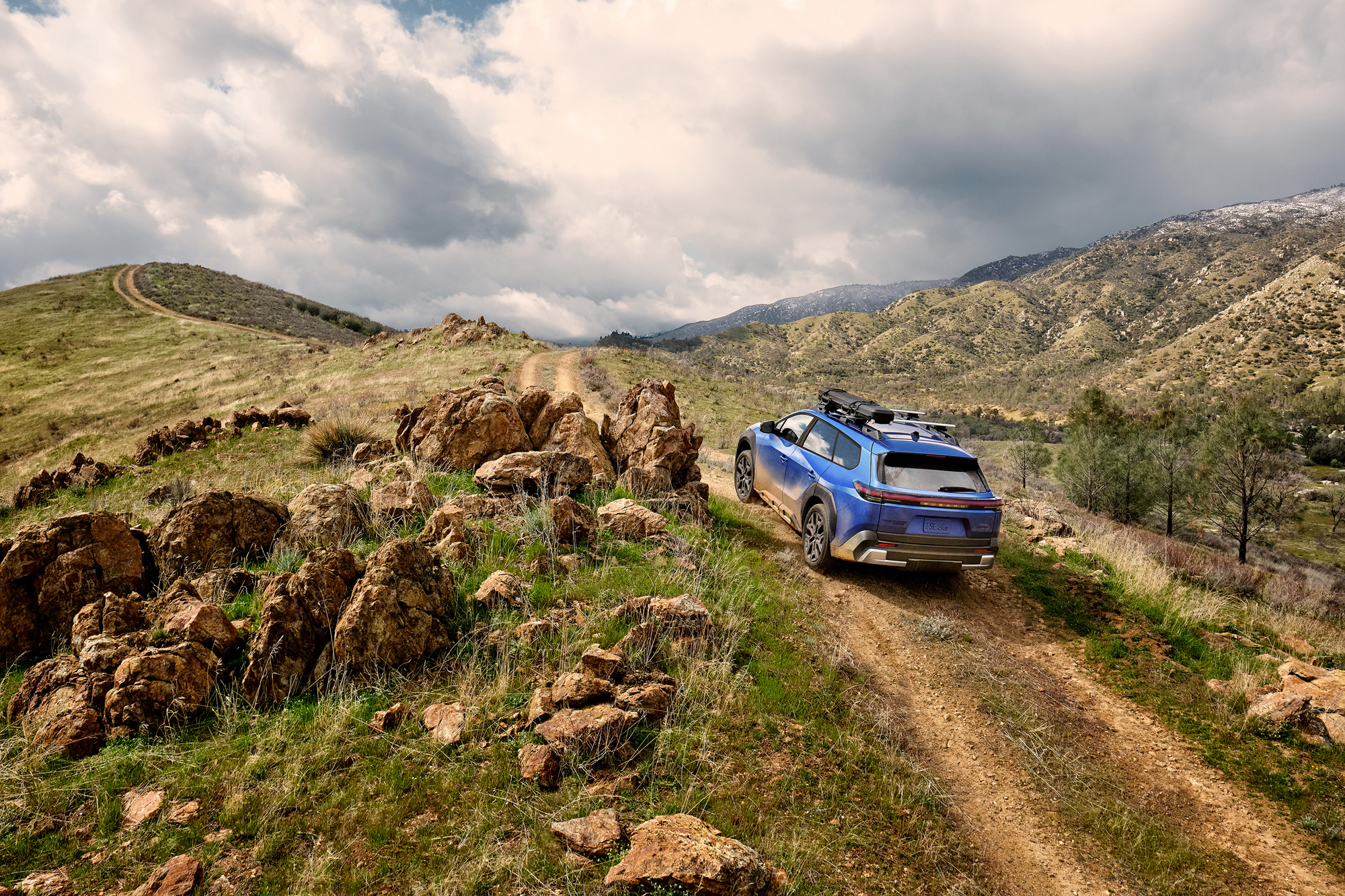
The Trailseeker shares much of its mechanical and interior architecture with Subaru’s smaller Solterra electric SUV, but it’s more than six inches longer and nearly an inch taller. That extra length is put to good use. The rear bodywork is squarer, the cargo area is more accommodating, and two extra side windows improve visibility while letting more light into the back. It has the sort of shape that suggests it was designed by someone who has actually tried to pack for a family vacation.
Fold the rear seats, and there’s as much as 74 cubic feet of cargo space. The smaller Solterra manages 63.5 cubic feet. That’s a useful difference, especially if your hobbies involve camping equipment, bicycles, or buying things at a home improvement store without first measuring the trunk.
Subaru says the Trailseeker can accommodate a full-size dog crate. I don’t have a particular need to transport a dog in a crate, but I appreciate the thinking. There are raised roof rails for extra gear, too, and a rear-window wiper. That last item deserves a round of applause. A rear wiper may not sound terribly exciting, but neither does indoor plumbing until you’re forced to live without it.
In other words, Subaru has built an electric vehicle that seems to understand what people actually do with their cars. This is not a sleek electric crossover designed to look as though it has just arrived from a distant planet. It’s a practical wagon-like SUV designed to carry people and their belongings. And that, I suspect, is why I like it.
The next surprise arrives when you press the accelerator.
The Trailseeker has two electric motors producing a combined 375 horsepower, and all-wheel drive comes standard. Subaru says it’ll sprint from zero to 60 mph in 4.4 seconds. That’s properly quick. Not quick for an electric car, or quick for a family SUV, but just plain quick.
I pressed the accelerator and discovered that the Trailseeker has the sort of instant response that makes merging onto a busy highway a remarkably uncomplicated affair. There’s no waiting for a turbocharger to wake up, no gearbox hunting for the right ratio, and no engine clearing its throat before deciding to do something useful. You press the pedal, and off you go.
It’s the sort of performance that makes you wonder why so many electric vehicles have been designed to look like expensive kitchen appliances. Here is a practical Subaru with enough shove to make an overtaking maneuver feel almost effortless. It doesn’t need to shout about its performance, either. It simply gets on with it.
Now, I should point out that the Trailseeker isn’t some sort of electric rally car. It doesn’t particularly encourage you to go charging around a mountain road, and the driving experience is more comfortable than entertaining. But that’s all right. My Outback wasn’t a sports car, either. The point was that it did everything reasonably well, and the Trailseeker follows much the same philosophy.
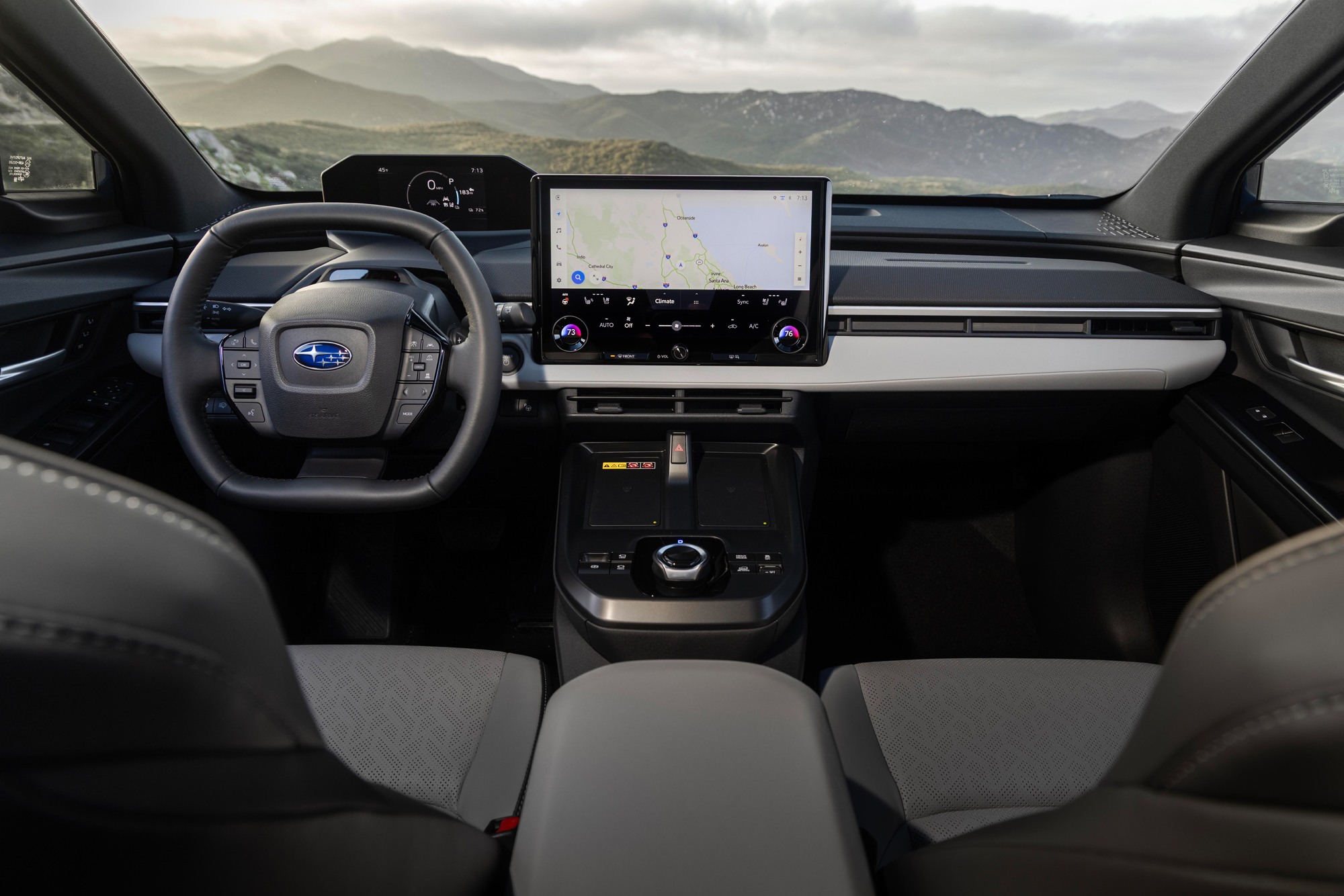
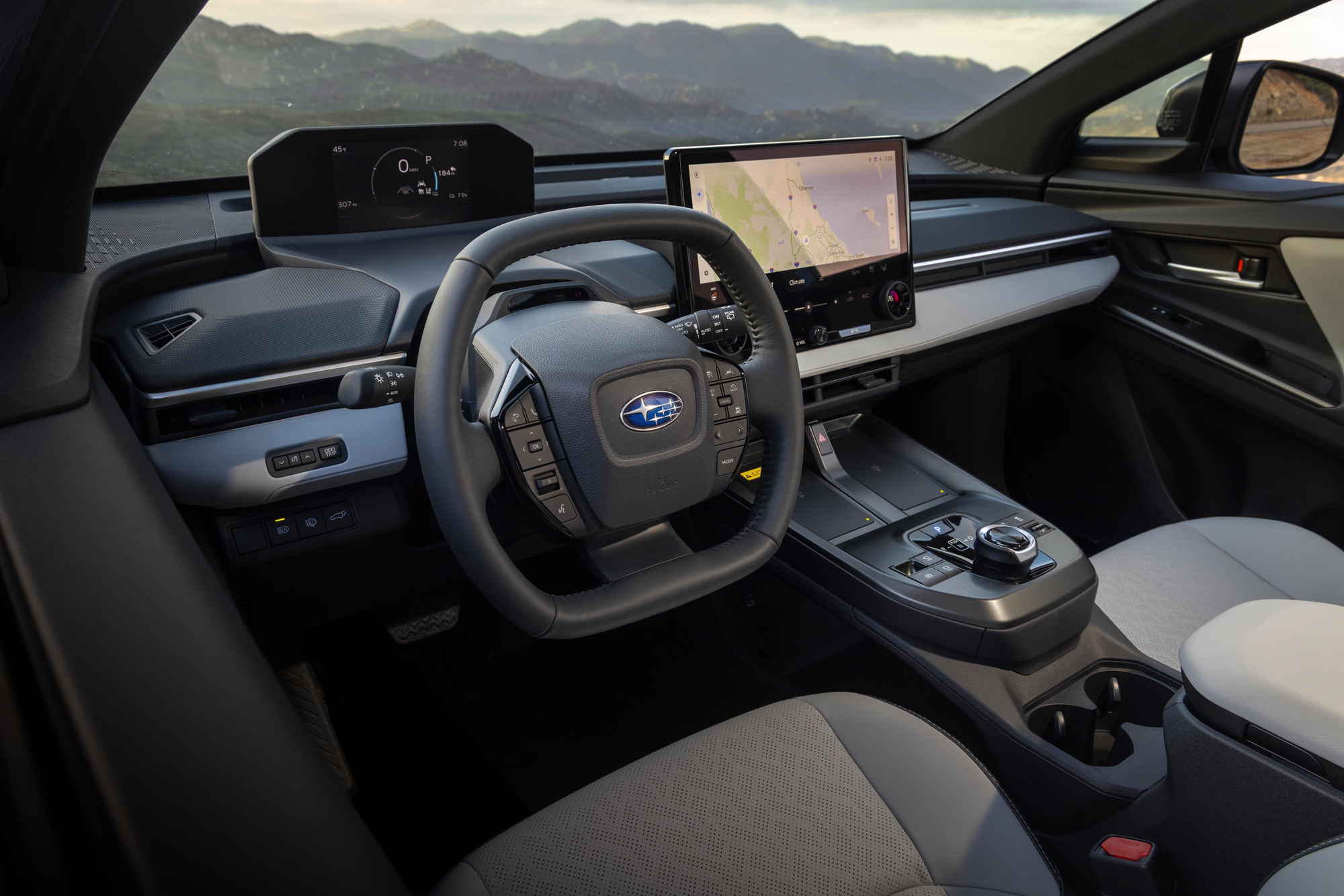
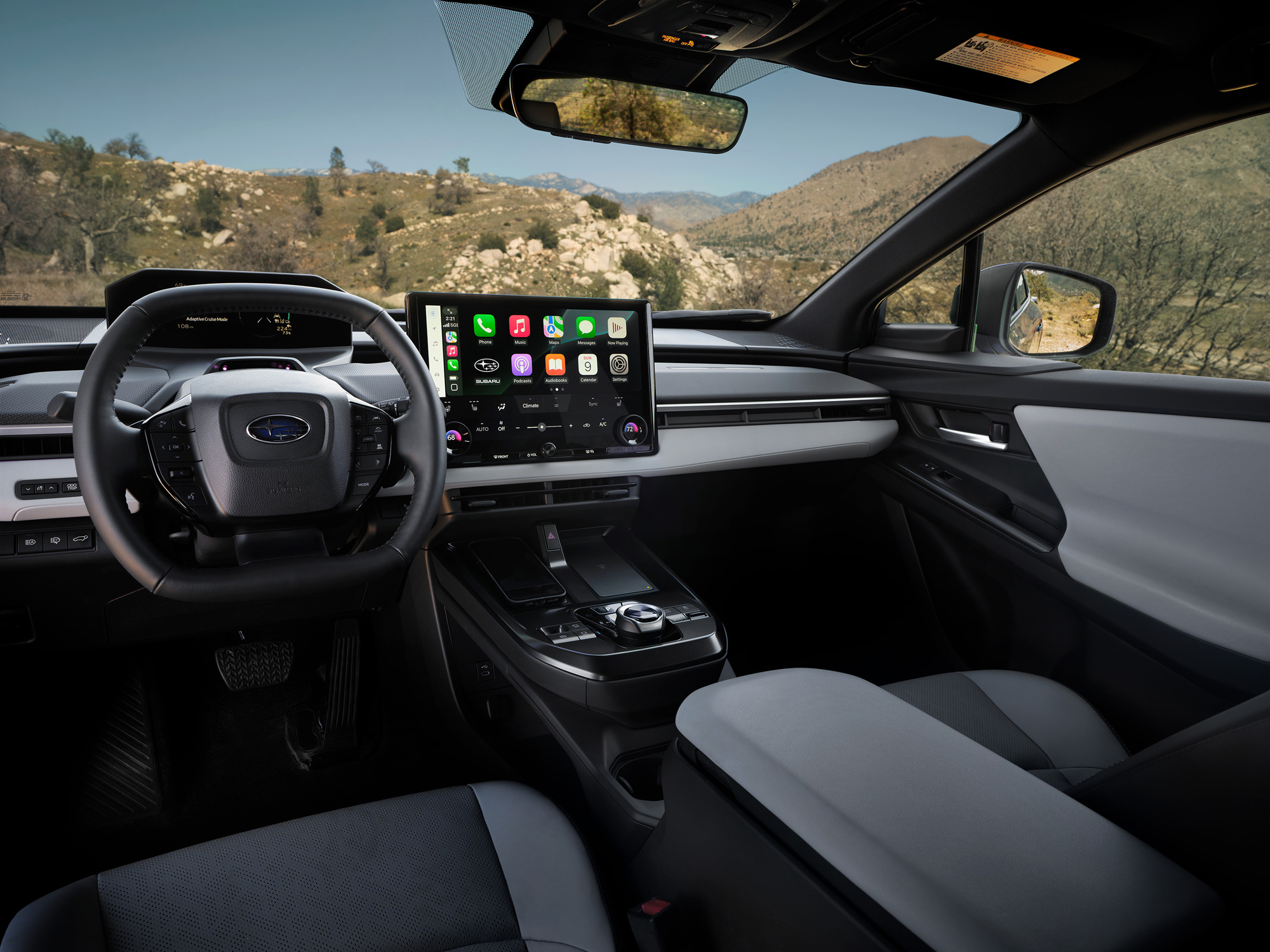
The ride is comfortable, the cabin is practical, and there’s enough room for everyday life. It feels like a car designed to be used rather than one designed to impress your neighbors while sitting in the driveway. I would have liked the 360-degree camera system to be available on more than just the top two trims, because seeing all the way around a vehicle is rather useful when parking. But otherwise, the Trailseeker gets the fundamentals right.
Then, inevitably, we arrive at the question that has been hanging over electric vehicles since the first one was plugged into a wall: range.
The Trailseeker has a 74.7-kWh battery and an EPA-estimated range of up to 281 miles on the base model with smaller wheels. Choose one of the two trims with 20-inch wheels, and that falls to 274 miles. Those aren’t earth-shattering figures, and several electric rivals will travel farther before asking you to stop and find a charger.
DC fast charging is rated at up to 150 kilowatts, and Subaru says a charge from 10 to 80 percent can take around 28 minutes under suitable conditions. The charging connector uses the North American Charging Standard, opening the door to compatible charging infrastructure across the country.
I still have some reservations about long-distance travel in an electric vehicle. A gasoline-powered car gives you a freedom that’s difficult to appreciate until you start looking for a charging station in an unfamiliar place. You can pull into almost any gas station, spend a few minutes filling the tank, and carry on. With an EV, you need to think about where you’re going, how far it is, and whether the charging station you were counting on is actually available.
But here’s where my argument begins to fall apart.
I now have a charger at home.
That changes things rather dramatically. Instead of visiting a gas station every week, I can plug the Trailseeker in at home and wake up with a charged battery. Most of my everyday driving doesn’t involve traveling hundreds of miles in a single sitting, so the range that once seemed like a deal-breaker is suddenly a much smaller concern. The car is ready when I am, and I don’t have to make a special trip to refuel it.
It’s almost as if the people who designed electric vehicles expected us to charge them at home. Imagine that.
And when I do need to travel farther, the Trailseeker’s range and fast-charging capability make the prospect considerably less daunting than I once imagined. No, it isn’t quite the same as driving a gasoline-powered car, and I’m not about to pretend every charging stop is a magical experience. But the inconvenience I spent years imagining isn’t nearly as universal as I thought it would be.
The price makes the argument even more interesting. The Trailseeker’s MSRP comes in below that of the 2026 Outback, meaning the electric wagon-shaped Subaru isn’t simply an expensive experiment for people with more money than sense. It’s an alternative to a conventional Subaru that can cost less before you even begin calculating what you might save on gasoline and routine maintenance.
That last point is worth considering. I have spent years looking at electric vehicles and wondering why I’d pay more for something that required me to change the way I drove. But if the purchase price is lower, the performance is excellent, the cargo area is useful, and I can charge it at home, the equation looks rather different.
Suddenly, the Trailseeker isn’t asking me to make a sacrifice for the sake of the planet or because someone in a government office has decided that the internal-combustion engine is an instrument of evil. It’s simply offering me a practical vehicle that happens to run on electricity.
And it turns out I rather like it.
The 2026 Subaru Trailseeker hasn’t solved every problem with electric vehicles. Its range could be better, long-distance travel still requires more planning, and the driving experience isn’t particularly thrilling once the initial acceleration wears off. But it has managed to do something I genuinely wasn’t expecting: make me reconsider my entire position on electric cars.
It looks like the Outback I remember. It’s comfortable, useful, and spacious enough to handle the demands of everyday life. It’s quick enough to make me grin when I put my foot down, and its price undercuts the conventional Outback. Add a home charger, and suddenly the biggest objection I had to owning an EV begins to look rather flimsy.
I started this year as a man who liked his Subaru Outback and couldn’t understand why anyone would want an electric car. Now I’m looking at a Trailseeker and wondering whether the gasoline-powered future I’ve been defending so vigorously might not be quite as essential as I thought.
That’s quite an achievement for a car company that has managed to make its new electric vehicle look more like its old station wagon than its actual new station wagon.
Well done, Subaru. Well done indeed.
The 2026 Subaru Trailseeker
MSRP: $43,995
MSRP (as tested): $45,840
Engine: Electric 375 horspower
Range: 274 miles
Base Curb weight: 4,530 lbs.
Exterior Dimensions
Length: 190.8 in.
Overall width without mirrors: 73.2 in.
Height: 65.9 in.
Wheelbase: 112.2 in.
Ground clearance: 8.3 in.
Interior Dimensions
Front head room: 38.8 in.
Front leg room: 42.1 in.
Front shoulder room: 58 in.
Front hip room: 54.4 in.
Rear head room: 38 in.
Rear leg room: 35.3 in.
Rear shoulder room: 55 in.
Rear hip room: 46.2 in.
Cargo Space/Area Length Behind First Row: 75 in.
Cargo Space/Area Length Behind Second Row: 47 in.
Cargo Space/Area Width at Beltline: 42.3 in.
Cargo Bed Width Between Wheelhousings: 39.6 in.
Cargo Bed Height: 36.5 in.
Cargo Space/Area Behind Front Row 74 (cubic feet)
Cargo Space/Area Behind Second Row 31.3 (cubic feet)
Warranty
3 Basic Years / 36,000 Basic Miles
5 Drivetrain Years / 60,000 Drivetrain Miles
5 Corrosion Years / Unlimited Corrosion Miles
3 Roadside Assistance Years / 36,000 Roadside Assistance Miles
8 Traction Battery Years / 100,000 Traction Battery Miles

Greg was a writer for DriveTribe supporting Amazon's The Grand Tour and has been published in major publications across the country including the Los Angeles Times, the Cleveland Plain Dealer and the Atlanta Journal-Constitution. He was also a contributor to Chicken Soup for the NASCAR Soul, published in 2010, and the Christmas edition in 2016. He wrote as the NASCAR, Formula 1, Auto Reviews and National Veterans Affairs Examiner for Examiner.com and has appeared on Fox News. He holds a BS degree in communications, a Masters degree in psychology. He is currently the weekend Motorsports Editor for Autoweek and a regular contributor to Forbes.
- Caraganza First Drive Review 2026 Subaru Trailseeker: The Outback Has Gone Electric - October 4, 2026
- Verstappen makes a wet and wild F1 race look easy as Red Bull-Ford finally get their moment - October 4, 2026
- Caraganza Review 2026 Nissan Armada NISMO: A Giant SUV With a Racing Complex - September 27, 2026


Greg Engle
Latest posts by Greg Engle (see all)
- Caraganza First Drive Review 2026 Subaru Trailseeker: The Outback Has Gone Electric - October 4, 2026
- Verstappen makes a wet and wild F1 race look easy as Red Bull-Ford finally get their moment - October 4, 2026
- Caraganza Review 2026 Nissan Armada NISMO: A Giant SUV With a Racing Complex - September 27, 2026
- George Russell survives Baku’s walls, chaos and Max Verstappen - September 26, 2026