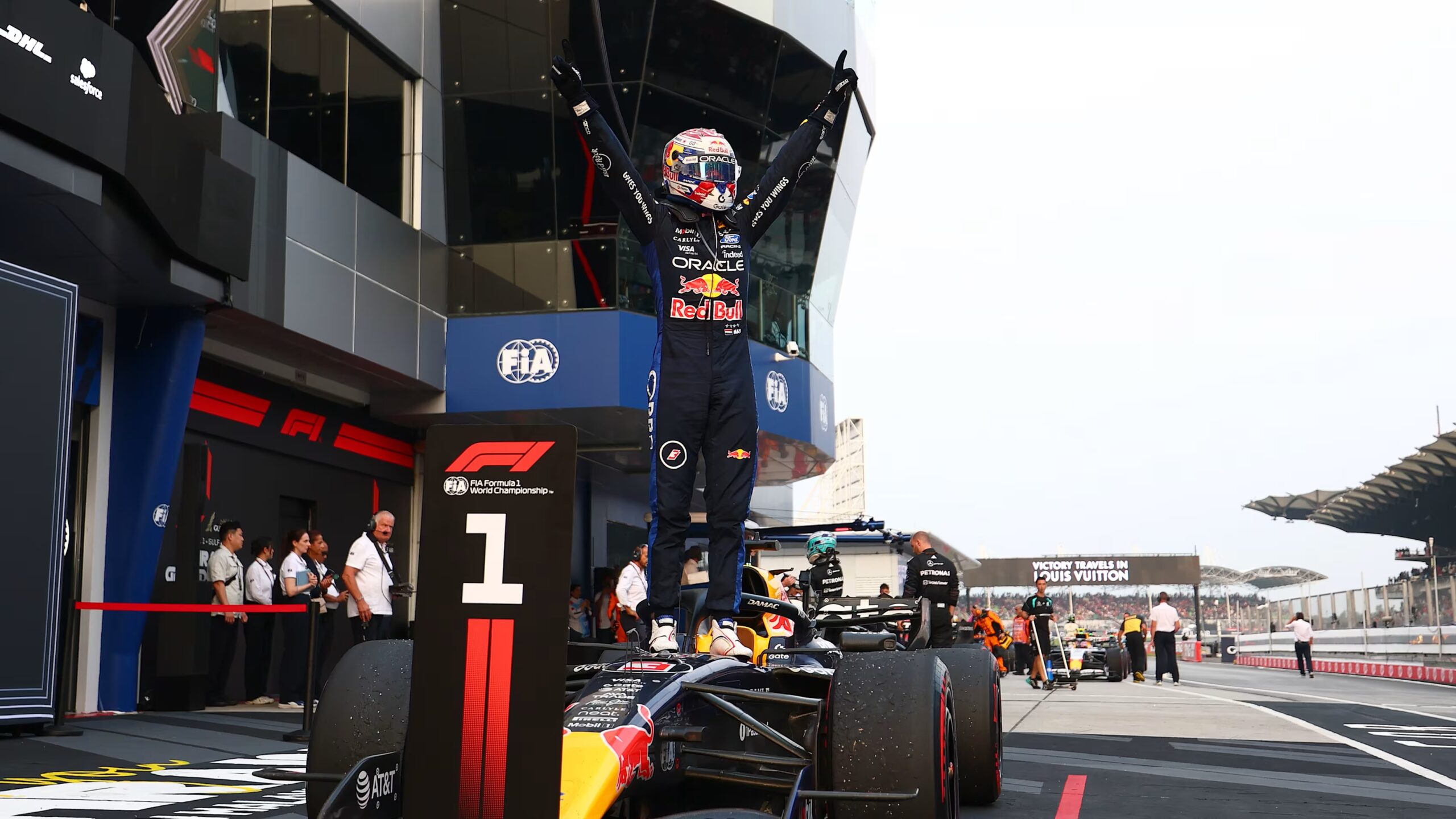
Max Verstappen has spent years making Formula 1 look almost insultingly easy. Give him a fast car, a clear track and a set of tires that vaguely resemble the ones he wants, and the Dutchman generally gets on with the business of ruining everyone else’s Sunday.
But at the 2026 Malaysian Grand Prix at Sepang, even Verstappen had to work for his dinner.
Rain delayed the start by more than an hour, tire choices became a game of automotive roulette, Safety Cars shuffled the field, and Mercedes briefly looked as though it might turn the afternoon into a private party. Verstappen eventually put an end to all that, converting pole position into victory and delivering the first win of the season for Red Bull Racing and its new Red Bull Ford Powertrains operation.
The four-time World Champion crossed the finish line 2.307 seconds ahead of Mercedes’ Kimi Antonelli after 55 laps around the Sepang International Circuit. Lewis Hamilton completed a remarkable recovery drive to finish third for Ferrari, with teammate Charles Leclerc fourth.
For Red Bull and Ford, however, the biggest number on the afternoon’s report card was the one beside Verstappen’s name. First place. In the first season of their new powertrain partnership, that’s the sort of result that makes a very long engineering meeting feel considerably less painful.
The afternoon began with the sort of tropical downpour that makes you wonder why anyone would voluntarily race a car at more than 180 mph in the first place.
The scheduled start was delayed by 40 minutes as heavy rain left the 5.543-kilometer circuit treacherous. Drivers struggled to get their tires up to temperature, and several encountered difficulties even before the race had properly begun. Isack Hadjar briefly visited the gravel, while Verstappen and Hamilton experienced problems that left their throttle inputs ineffective during the disrupted start procedure.
Race Control eventually suspended the process, adding another 53 minutes to the wait.
Because apparently a Formula 1 race weekend doesn’t already involve enough standing around in expensive fireproof underwear.
When the field finally got moving, the teams were split between those choosing intermediate tires for the damp surface and those gambling that slicks would prove the faster option as the track dried.
Verstappen, Antonelli, George Russell and Hadjar went with intermediates. Hamilton, Leclerc, Lando Norris and Oscar Piastri opted for slicks.
It was a decision that would shape the race, although not quite in the way Ferrari might have hoped.
Antonelli and Russell launched beautifully when the lights finally went out, sweeping past Verstappen and giving Mercedes an early one-two into Turn 1.
Verstappen held third, narrowly keeping Liam Lawson behind him, while the Ferrari drivers and Norris immediately found themselves fighting a tire choice that looked increasingly questionable.
Leclerc made contact with Nico Hülkenberg’s Audi, damaging his front wing and forcing an early pit stop. Hamilton stayed out, committing himself to the original strategy even as the race threatened to unravel around him.
Verstappen, meanwhile, was already busy correcting the situation.
On Lap 6, he swept around the outside of Russell into Turn 4 to reclaim second place. Two laps later, he was close enough to Antonelli to make the Mercedes driver glance nervously at his mirrors.
Antonelli ran wide at the final corner but held the lead. Russell remained close, and for a brief moment Mercedes looked capable of controlling the race.
Then Valtteri Bottas spun into the gravel at Turn 13 on Lap 9, bringing out the Safety Car.
Sometimes motorsport rewards brilliant engineering. Sometimes it rewards a driver who happens to be in the right place when someone else gets stuck in a gravel trap.
This time, Verstappen was among the beneficiaries.
The neutralization gave the intermediate runners the perfect opportunity to switch to slick tires as the track dried. Mercedes and Red Bull took advantage, while the early slick starters were able to recover some of the time they had lost by changing strategy.
When the field prepared to race again, Antonelli remained ahead of Verstappen, with Russell third.
That arrangement lasted about as long as you’d expect.
Verstappen, now armed with the softer compound, swept around the outside of Antonelli into Turn 1 to take the lead. Russell then passed his teammate at Turn 5, dropping the young Italian to third.
Red Bull had the lead back, and Verstappen was beginning to stretch his legs.
Verstappen quickly built a gap of more than three seconds over the Mercedes pair. Antonelli eventually worked his way past Russell on Lap 21, reclaiming second and attempting to keep the Red Bull within striking distance.
Meanwhile, Hamilton was putting on a show of his own.
After falling toward the back of the field during the opening exchanges, the Ferrari driver climbed to fifth by Lap 22, passing rivals in quick succession. Leclerc followed, breaking into the top 10 a lap later.
Ferrari’s decision to start on slicks had initially looked like a mistake of monumental proportions. Now, thanks to changing conditions and a little strategic patience, both red cars were clawing their way back into contention.
Antonelli’s pursuit of Verstappen suffered another setback on Lap 24 when he ran wide at the final corner and struck the pit-entry bollard. The mistake cost him valuable time, allowing Verstappen to increase his advantage to 7.5 seconds.
Mercedes still had Russell in the fight, but its hopes of challenging for victory were fading.
The second round of pit stops began around Lap 29. Russell stopped on Lap 32 for soft tires, later expressing concern that the stop had come too early. Antonelli pitted a lap later to cover the undercut threat.
Verstappen followed and emerged with a comfortable advantage of approximately 11 seconds over the Mercedes pair.
At that point, the race appeared to be moving toward a fairly straightforward conclusion. Verstappen had the pace, Red Bull had made the right calls, and the only thing left was to avoid doing anything spectacularly stupid.
Formula 1, naturally, had other plans.
Alex Albon’s Williams stopped with a gearbox problem on Lap 41, triggering a Virtual Safety Car. Verstappen used the reduced-speed conditions to make another pit stop, temporarily handing the lead to Antonelli.
Both Ferraris also changed tires, while Mercedes brought both cars in on the following lap.
The Virtual Safety Car was then replaced by a full Safety Car, bunching the field together and setting up a final sprint to the finish.
Verstappen returned to the front ahead of Antonelli and Russell, with Hadjar fourth and Hamilton fifth. Leclerc, Piastri, Norris, Lawson and Fernando Alonso completed the top 10.
Norris, who had been running close behind teammate Piastri, managed to lose control of his McLaren while following the field behind the Safety Car and ran through the gravel. It was an awkward moment for a driver who had been hoping to make up ground, and it compromised his position heading into the restart.
When racing resumed, Verstappen kept control at the front. Hamilton and Leclerc dispatched Hadjar to move into third and fourth, respectively, while the Red Bull’s lead remained intact.
Then came the final twist.
Russell’s Mercedes ground to a halt on the start/finish straight, ending his afternoon and handing Antonelli an additional advantage in the Drivers’ Championship. What had looked like a strong Mercedes result was suddenly reduced to a second-place finish for the Italian and a retirement for his teammate.
Antonelli crossed the line 2.307 seconds behind Verstappen. Hamilton finished 4.919 seconds behind the winner, with Leclerc a further 2.339 seconds back.
Hadjar took fifth for Red Bull, ahead of Piastri and Lawson. Alonso secured eighth for Aston Martin, Norris recovered to ninth, and Racing Bulls rookie Arvid Lindblad claimed the final points-paying position in 10th.
For Verstappen, the victory was a reminder that even in a season when the machinery hasn’t always behaved as he would like, he remains one of the most difficult men in motorsport to keep behind you.
For Red Bull Ford Powertrains, it was something more significant.
Building a competitive Formula 1 power unit is not a matter of bolting together a few expensive bits of machinery and hoping the engine doesn’t explode before the first corner. It takes enormous investment, engineering expertise and the sort of painstaking development work that rarely makes for particularly exciting television.
Verstappen knows that better than most. Red Bull and Ford have spent the early part of their first season together working through the inevitable challenges of a new powertrain, gradually bringing performance upgrades to the car and learning where the package needs improvement. Sunday’s result suggested that work is beginning to pay off.
“What an incredible result!” Verstappen said. “Of course, to win a race in the first year of being a new power unit manufacturer is honestly just incredible and something everyone should be really proud of.”
The Dutchman admitted the team had endured difficult moments along the way, even questioning at times whether a victory was within reach. But Red Bull kept working, and the combination of improved performance, sound tire strategy and a driver who knows precisely when to put the hammer down finally delivered.
“Step by step, we have been getting closer and today we did it, which is really special and an emotional moment,” Verstappen said. “It is an incredible project and winning in our first season together is a fantastic feeling.”
That’s a rather good return on a project that involves considerably more than putting a blue oval on an engine cover. Ford’s return to Formula 1 through its partnership with Red Bull is a serious engineering undertaking, and this victory gives the program something every new venture desperately needs: proof that the hard work can produce results on Sunday afternoon, rather than merely impressive presentations on Monday morning.
Mercedes, meanwhile, had its own reasons to leave Malaysia feeling frustrated.
Antonelli finished second, extending his championship advantage over teammate George Russell after the Briton’s late retirement, but the Italian made no secret of the fact that Mercedes had arrived hoping for more.
“Overall, given our struggles this weekend, I think P2 was the maximum we could have achieved today,” Antonelli said. “The conditions were really challenging, both with the difficult call on which tyre to start on, when to stop to take the slicks, and then when to stop and what compound to take to ensure we held on to second.”
The Mercedes driver credited the team for its strategic decisions, but the underlying problem was pace. Verstappen had been able to pull away once he reclaimed the lead, leaving Antonelli to concentrate on securing second rather than launching a serious challenge for victory.
“Despite that, we leave Malaysia frustrated,” Antonelli said. “Our pace hasn’t been where we wanted it to be and we weren’t able to fight for victory.”
Russell’s retirement made the afternoon worse. Mercedes had looked capable of securing a strong double finish, only for the Briton’s car to grind to a halt on the start/finish straight. Antonelli was left to collect the points while his teammate watched another valuable result disappear.
Hamilton, by contrast, had every reason to be pleased with his afternoon.
The Ferrari driver started on slick tires in conditions that initially made that decision look like an invitation to spend the afternoon driving through the scenery. He dropped down the order, struggled to make progress and appeared to be heading toward a fairly miserable result.
Instead, he worked his way back to third, passing Hadjar in the closing stages and turning a difficult opening phase into a podium finish.
“Sepang is always a great track to race on, but today is definitely one of the most memorable,” Hamilton said. “It was a really demanding race and not an easy one to manage from the start, but the team did a fantastic job staying calm and executing well after a difficult opening phase.”
Hamilton credited Ferrari’s ability to stay focused despite the early setback, with the team refusing to let a questionable opening phase dictate the entire afternoon.
“We didn’t give up despite a big gap building straight away, and step by step we managed to fight our way back into contention and keep the pressure on until the flag,” he said.
For Hamilton, the podium was a reward for a recovery drive that required patience as much as outright speed. Leclerc’s fourth-place finish completed a useful afternoon for Ferrari, even if neither driver had looked particularly comfortable when the lights finally went out.
“To finish on the podium after the way the race began feels really satisfying and is a great reward for the hard work, determination and resilience everyone showed today,” Hamilton said.
But this was Verstappen’s afternoon.
He survived the rain, the delays, the changing grip levels and the late Safety Car. He recovered from losing the lead at the start, made the right tire calls and kept his head when the race threatened to turn into a lottery.
Most importantly, he delivered Red Bull and Ford their first victory of the season.
Formula 1’s newest powertrain partnership has its breakthrough win. And if the rest of the field was hoping Red Bull would need a little longer to get everything sorted, it may be time to reconsider those plans.
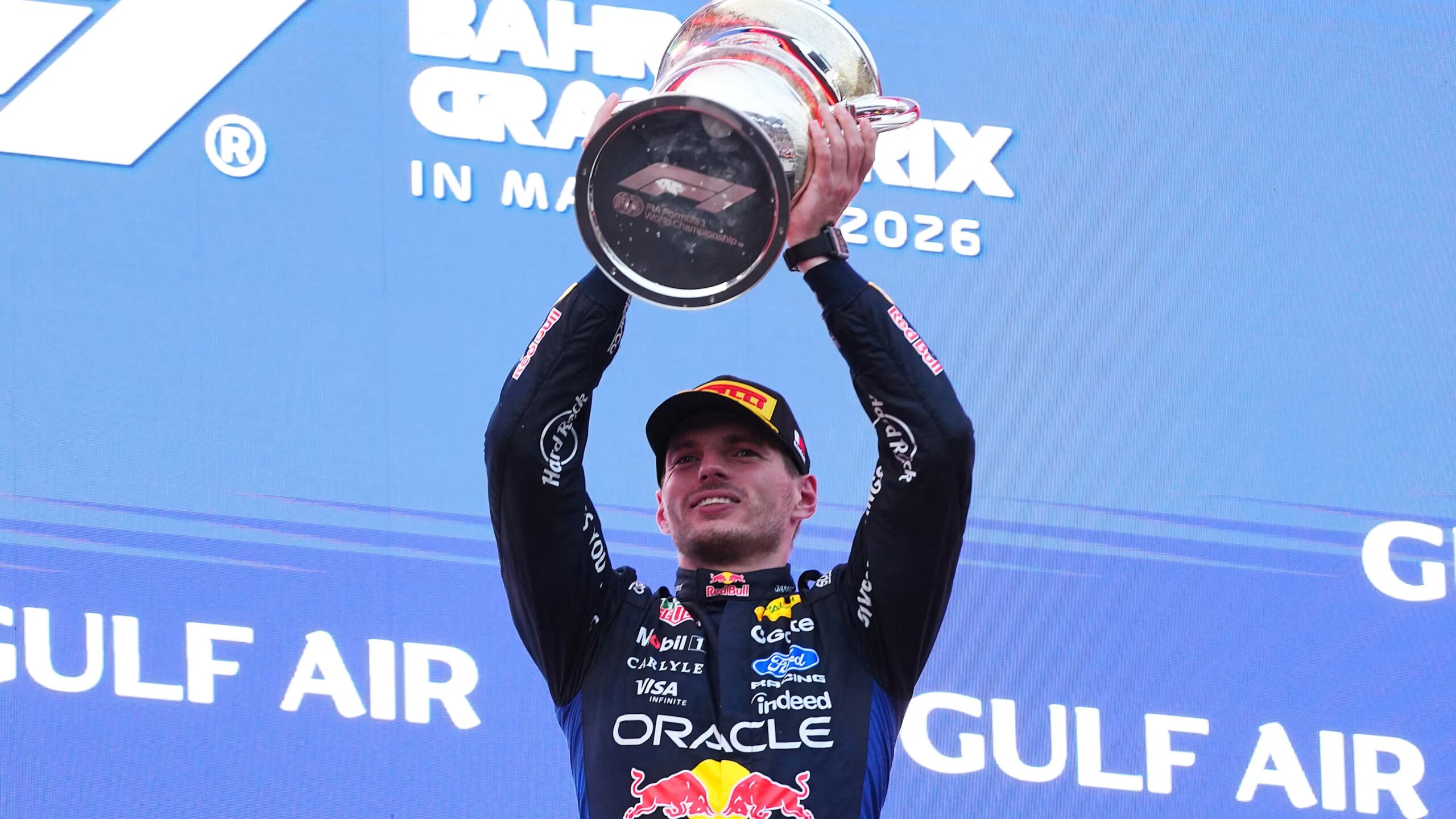 FORMULA 1 BAHRAIN GRAND PRIX IN MALAYSIA 2026 – RACE RESULT
| Pos. | No. | Driver | Team | Laps | Time / Retired | Pts. |
|---|---|---|---|---|---|---|
| 1 | 3 | Max Verstappen | Red Bull Racing | 55 | 1:47:14.808 | 25 |
| 2 | 12 | Kimi Antonelli | Mercedes | 55 | +2.307s | 18 |
| 3 | 44 | Lewis Hamilton | Ferrari | 55 | +4.919s | 15 |
| 4 | 16 | Charles Leclerc | Ferrari | 55 | +7.258s | 12 |
| 5 | 6 | Isack Hadjar | Red Bull Racing | 55 | +8.571s | 10 |
| 6 | 81 | Oscar Piastri | McLaren | 55 | +9.454s | 8 |
| 7 | 30 | Liam Lawson | Racing Bulls | 55 | +12.753s | 6 |
| 8 | 14 | Fernando Alonso | Aston Martin | 55 | +13.372s | 4 |
| 9 | 1 | Lando Norris | McLaren | 55 | +13.993s | 2 |
| 10 | 41 | Arvid Lindblad | Racing Bulls | 55 | +15.928s | 1 |
| 11 | 27 | Nico Hulkenberg | Audi | 55 | +17.404s | 0 |
| 12 | 18 | Lance Stroll | Aston Martin | 55 | +18.052s | 0 |
| 13 | 43 | Franco Colapinto | Alpine | 55 | +18.997s | 0 |
| 14 | 87 | Oliver Bearman | Haas F1 Team | 55 | +22.305s | 0 |
| 15 | 31 | Esteban Ocon | Haas F1 Team | 55 | +22.532s | 0 |
| 16 | 10 | Pierre Gasly | Alpine | 55 | +23.315s | 0 |
| 17 | 55 | Carlos Sainz | Williams | 55 | +25.431s | 0 |
| 18 | 5 | Gabriel Bortoleto | Audi | 55 | +28.233s | 0 |
| 19 | 11 | Sergio Perez | Cadillac | 55 | +29.310s | 0 |
| 20 | 63 | George Russell | Mercedes | 49 | DNF | 0 |
| NC | 23 | Alexander Albon | Williams | 41 | DNF | 0 |
| NC | 77 | Valtteri Bottas | Cadillac | 7 | DNF | 0 |

Greg was a writer for DriveTribe supporting Amazon's The Grand Tour and has been published in major publications across the country including the Los Angeles Times, the Cleveland Plain Dealer and the Atlanta Journal-Constitution. He was also a contributor to Chicken Soup for the NASCAR Soul, published in 2010, and the Christmas edition in 2016. He wrote as the NASCAR, Formula 1, Auto Reviews and National Veterans Affairs Examiner for Examiner.com and has appeared on Fox News. He holds a BS degree in communications, a Masters degree in psychology. He is currently the weekend Motorsports Editor for Autoweek and a regular contributor to Forbes.
- Verstappen makes a wet and wild F1 race look easy as Red Bull-Ford finally get their moment - October 4, 2026
- Caraganza Review 2026 Nissan Armada NISMO: A Giant SUV With a Racing Complex - September 27, 2026
- George Russell survives Baku’s walls, chaos and Max Verstappen - September 26, 2026


Greg Engle
Latest posts by Greg Engle (see all)
- Verstappen makes a wet and wild F1 race look easy as Red Bull-Ford finally get their moment - October 4, 2026
- Caraganza Review 2026 Nissan Armada NISMO: A Giant SUV With a Racing Complex - September 27, 2026
- George Russell survives Baku’s walls, chaos and Max Verstappen - September 26, 2026
- Formula 1 gives Kimi Antonelli another win and Lando Norris a headache - September 13, 2026