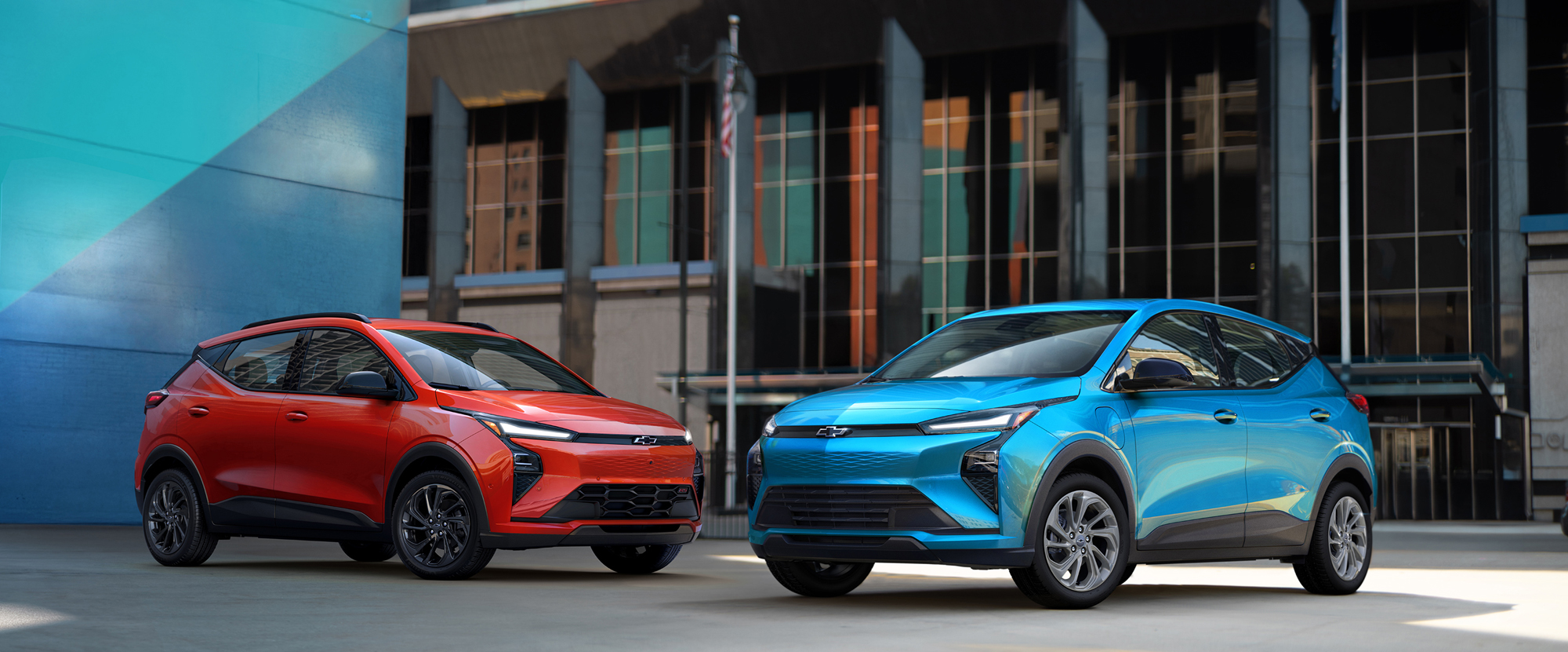
2027 Chevrolet Bolt RS and LT
There was a time when buying an electric car required a certain willingness to make sacrifices. You might have to endure questionable styling, an interior that looked as though it had been designed by someone who’d never actually sat in a car, and the prospect of spending a substantial portion of your afternoon waiting for the battery to charge. In exchange, you got to feel rather pleased with yourself for saving the planet, or at least for not contributing quite so enthusiastically to its destruction.
And, of course, you paid a premium for the privilege. It wasn’t all that long ago that buying a hybrid, let alone a fully electric car, could add the equivalent of a mortgage payment to your monthly expenses. At some point, you might even have wondered whether buying a house in the Hamptons would have been the more sensible financial decision.
The times, as they say, have changed. Electric cars are faster, charging times are shrinking, and manufacturers are finally figuring out how to build them without charging the gross domestic product of a small country.
The Chevrolet Bolt is a fine example if this. I spent a week with a 2020 model several years ago, and it was a good week. In fact, it was the first fully electric car that ticked nearly all the boxes for me. For the first time, I felt as though I wasn’t actually driving an electric car. It simply felt like a car that happened to run on electricity.
The 2020 Bolt offered an EPA-estimated 259 miles of range from its 66-kWh battery, along with 200 horsepower and 266 lb-ft of torque. It was practical, reasonably entertaining and capable of covering a decent distance without requiring a lengthy relationship with a charging station.
But there was a problem. Ah, yes. There was that premium.
My test car was a Premier, with an as-tested price of $44,130. At the time, that was a fairly serious sum for a compact hatchback, even one that could travel more than 250 miles without stopping for a charge.
Then, in 2023, General Motors decided to kill off the Bolt to make room for bigger, more expensive electric trucks. It subsequently discovered that customers rather liked the idea of an affordable electric car. Who could possibly have seen that coming?
GM announced that the Bolt would return, and after a brief automotive disappearance act, here we are. Chevrolet has resurrected the Bolt for 2027, and it sent me one for a week to see what had changed.
Quite a bit, as it turns out.
The new Bolt uses a 65-kWh lithium iron phosphate battery and produces 210 horsepower. Torque, however, drops considerably, from 266 lb-ft in the 2020 model to 169 lb-ft. Range increases slightly, to an EPA-estimated 262 miles. That’s an extra three miles, which is hardly enough to warrant a ticker-tape parade.
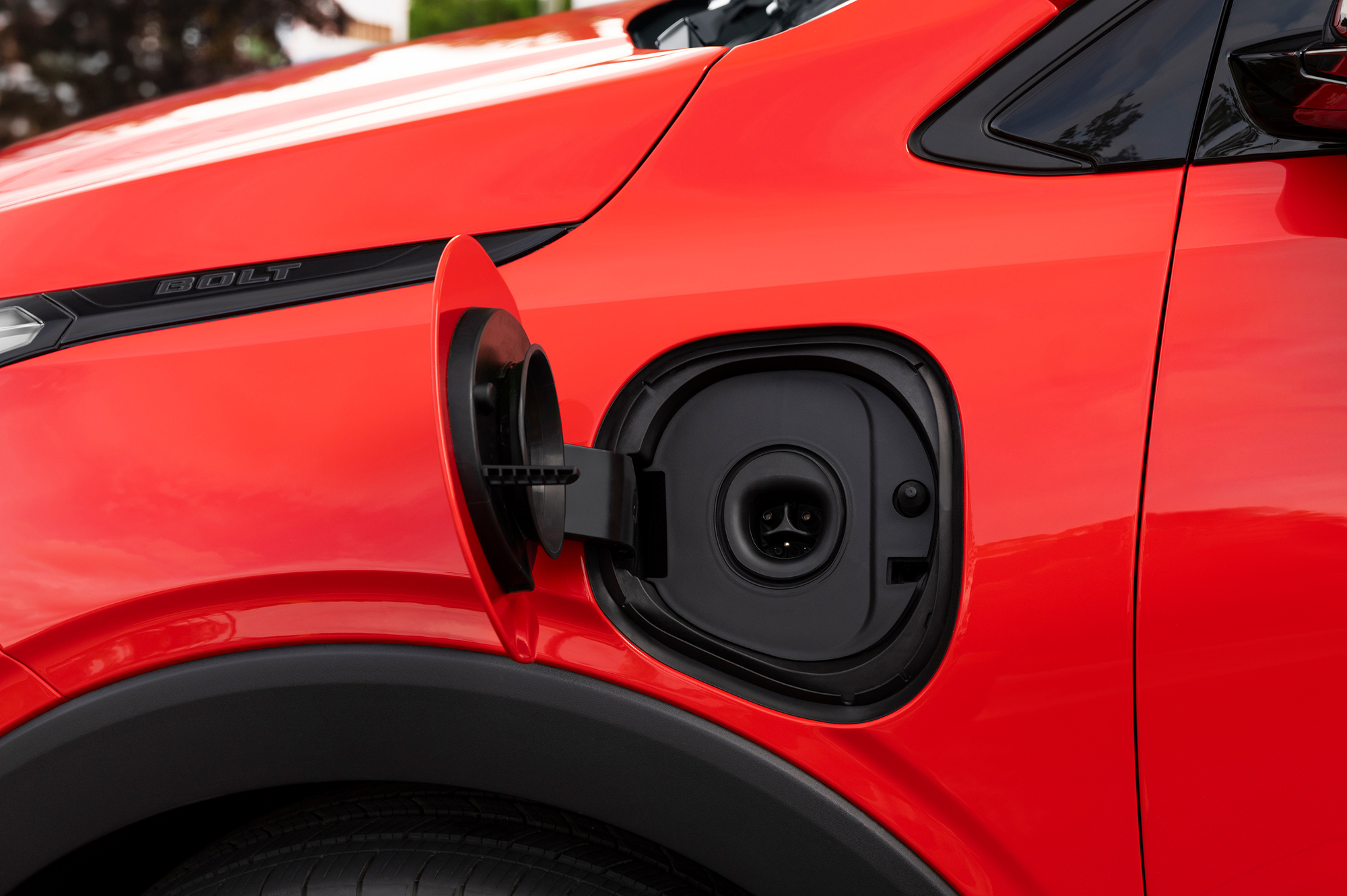
The big improvement is charging speed. The old Bolt’s maximum DC fast-charging rate was a rather leisurely 55 kW. The new model can accept up to 150 kW, making a stop to recharge considerably less of an endurance event. It also has a native NACS charging port, allowing owners to use compatible Tesla Superchargers without needing a separate adapter.
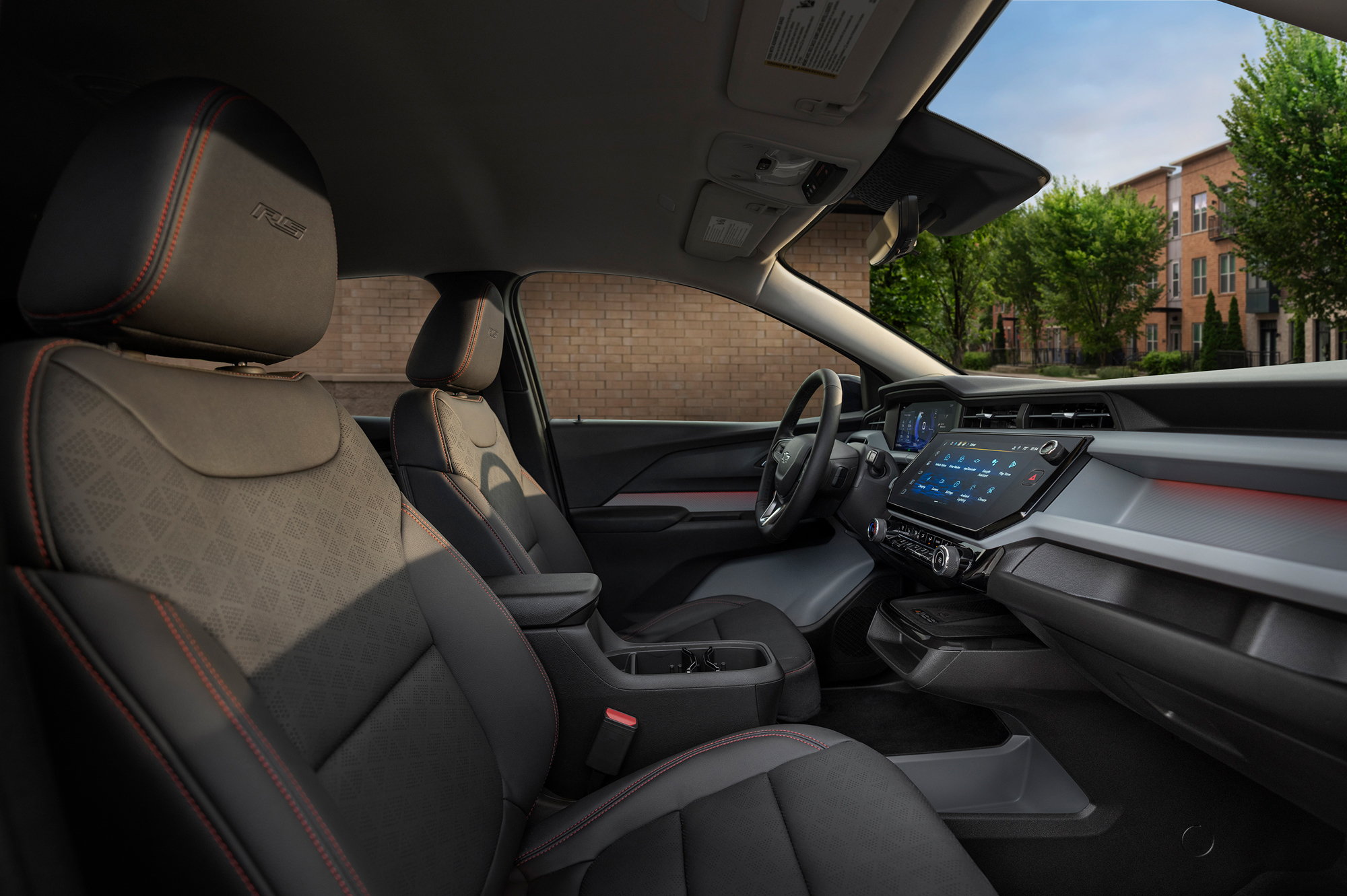
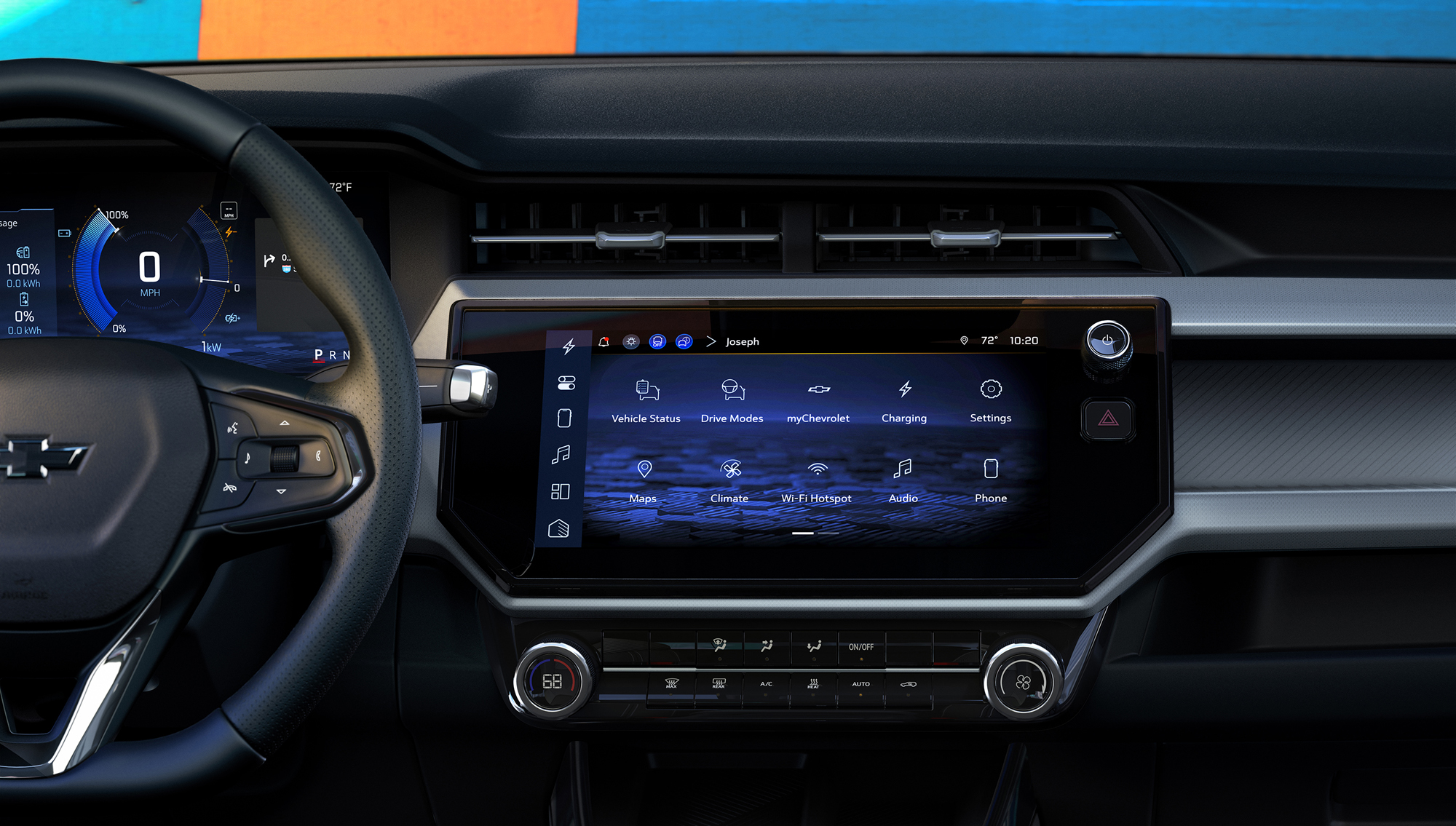
The cabin has received a substantial technological upgrade, too. The 2020 model’s 10.2-inch infotainment screen has given way to an 11.3-inch touchscreen, joined by an 11-inch digital driver display. The new Bolt offers Google built-in, more modern driver-assistance technology and available Super Cruise hands-free driving capability. It can also support vehicle-to-home power with compatible GM Energy equipment.
Sadly, Apple CarPlay and Android Auto have been sent packing, replaced by Chevrolet’s integrated infotainment system. As someone who rather likes having his phone do the heavy lifting when it comes to navigation and music, I wasn’t thrilled.
I was, however, prepared to forgive Chevrolet this particular transgression when I saw the price.
The LT I had for my week starts at $28,995, including destination. That’s the entry-level model, to be fair, but even the range-topping RS starts at $32,995. My 2020 Premier cost $44,130 as tested.
Well, then. Now you have my complete and utter attention.
Even allowing for the difference between a starting MSRP and an as-tested price, Chevrolet has made the Bolt considerably more affordable. Adjust the 2020 price for inflation, and the difference becomes even more striking.
So how has GM managed to improve the technology while cutting the price? It hasn’t simply started removing bits and pieces until the accountants stopped shouting. The company is sharing components across its electric vehicles, including the electric drive unit and power electronics used in the Equinox EV. It has also adopted LFP battery chemistry, which generally costs less to manufacture.
In other words, GM has finally figured out how to build an electric car without reinventing the wheel every time. The savings are finding their way to the showroom instead of disappearing into an engineering department.
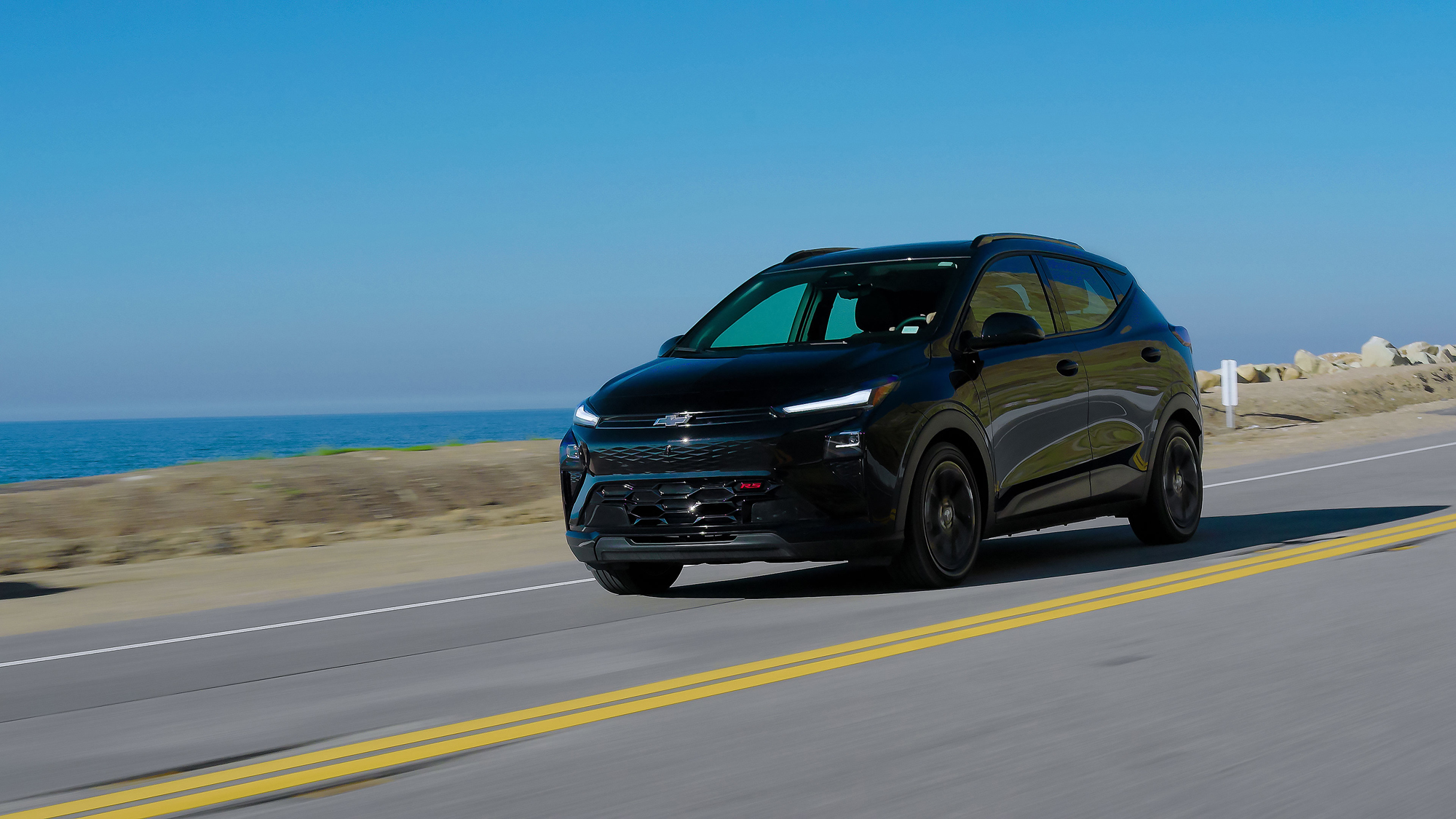
On the road, the new Bolt still drives well. I was concerned that the reduction in torque might rob it of some of the immediacy that made the 2020 car appealing, but I didn’t find the difference particularly noticeable in everyday driving. There’s still enough performance for a compact hatchback, and the cabin remains practical, with plenty of useful space.
The Bolt offers more modern technology, substantially quicker DC fast charging and a starting price below $30,000. That’s a rather impressive collection of improvements.
However, there remains a problem. And, at least to me, it’s a pretty big one. A box that has yet to be checked.
The styling.
I think back to the early Toyota Prius. It was hardly a pinup model. Its peculiar proportions and anonymous styling made it look like an appliance designed to transport people between the supermarket and a recycling center. Toyota eventually recognized that an efficiency champion didn’t have to look like a rolling compromise. The fifth-generation Prius, introduced for 2023, was a dramatic visual departure. It was lower, sleeker and more athletic and, rather astonishingly, something people might actually buy because they liked the way it looked.
Toyota didn’t abandon the Prius’s mission. It simply made the car more desirable while continuing to pursue it.
GM apparently missed the memo.
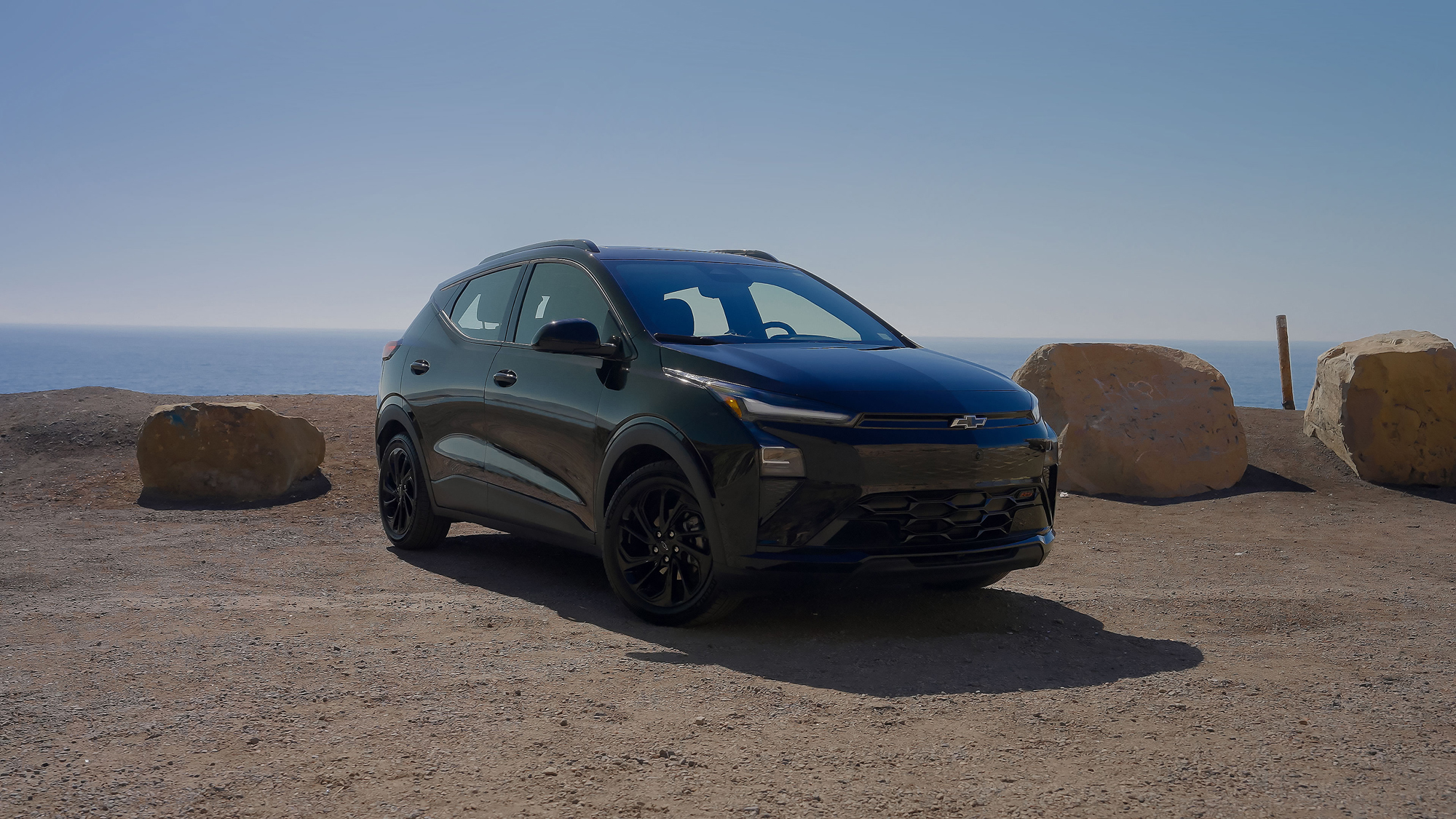
Yes, the 2027 Bolt has revised bodywork and a more modern front and rear treatment. But the changes haven’t gone far enough to give it a distinctive identity. It retains that basic upright, boxy silhouette. There’s nothing inherently wrong with a practical hatchback, and a square roofline does wonders for passenger and cargo space. Practicality, however, doesn’t excuse a lack of personality.
All of this was amplified by the particular model Chevrolet sent me. It was white, which made matters considerably worse. It looked like a refrigerator that had been given wheels and a government contract.
In fact, I began to wonder whether Chevrolet had borrowed the design team responsible for the US Postal Service’s Next Generation Delivery Vehicle, the decidedly utilitarian machine scheduled to begin rolling out in 2028. The resemblance, at least in spirit, was difficult to ignore.

The US Postal Service’s Next Generation Delivery Vehicle.
Make no mistake: the 2027 Bolt is evidence of how far Chevrolet has come in making electric motoring cheaper, more practical and easier to live with. The improvements are real, and the price is compelling. For buyers who want an affordable electric car that can handle the daily commute without turning every longer journey into a logistical exercise, there’s plenty to like.
But we’ve reached a point where engineering alone isn’t enough. The technology is improving, charging is getting faster and prices are finally coming down. Now the industry needs to make electric cars that appeal to the heart as much as they appeal to the spreadsheet.
Toyota figured that out with the Prius. Chevrolet has yet to do the same with the Bolt.
Because nobody ever stood in a showroom, stared lovingly at a battery charging curve and thought, ‘Good Lord, I must have one of those.’
The 2027 Bolt may be a much better car than the one I drove in 2020. It just hasn’t become a car I’d particularly want to look at in the driveway.
And if we’re going to spend the next decade persuading people to go electric, perhaps we ought to give them something more enticing than a refrigerator with a government contract.
The 2027 Chevrolet Bolt LT
MSRP: $28,595
MSRP (as tested): $29,990
Drivetrain: Single permanent-magnet electric motor, front-wheel drive. 65-kWh lithium iron phosphate (LFP) battery. 210 horsepower, 169 lb-ft of torque.
Range: 262 miles, EPA-estimated, battery-only.
MPGe: 134 city / 106 highway / 120 combined.
Transmission: 1-speed direct drive with regenerative braking.
Curb weight: 3,776 lbs. (LT base model).
Charging: 150-kW maximum DC fast charging; approximately 25 minutes to charge from 10% to 80%. AC charging up to 11.5 kW. Native NACS charging port.
Exterior Dimensions (Inches)
Wheelbase: 105.3
Length: 169.6
Width, without mirrors: 69.7
Height: 63.9
Front Track Width: 59.5
Rear Track Width: 59.5
Ground Clearance: 5.6
Interior Dimensions
Passenger / Seating Capacity: 5
Total Passenger Volume (cubic feet): 96.6
Front Head Room (inches): 40.0 (without sunroof); 39.1 (with sunroof)
Front Leg Room (inches): 44.3
Front Shoulder Room (inches): 54.6
Front Hip Room (inches): 51.3
Second Row Head Room (inches): 37.8
Second Row Leg Room (inches): 39.1
Second Row Shoulder Room (inches): 52.0
Second Row Hip Room (inches): 50.1
Cargo Space Behind Rear Seats (cubic feet): 16.2
Maximum Cargo Space, Rear Seats Folded (cubic feet): 56.3
Warranty
Limited: 3 years or 36,000 miles
Powertrain: 5 years or 60,000 miles
Electric components / battery: 8 years or 100,000 miles
Complimentary scheduled maintenance: First maintenance visit
-

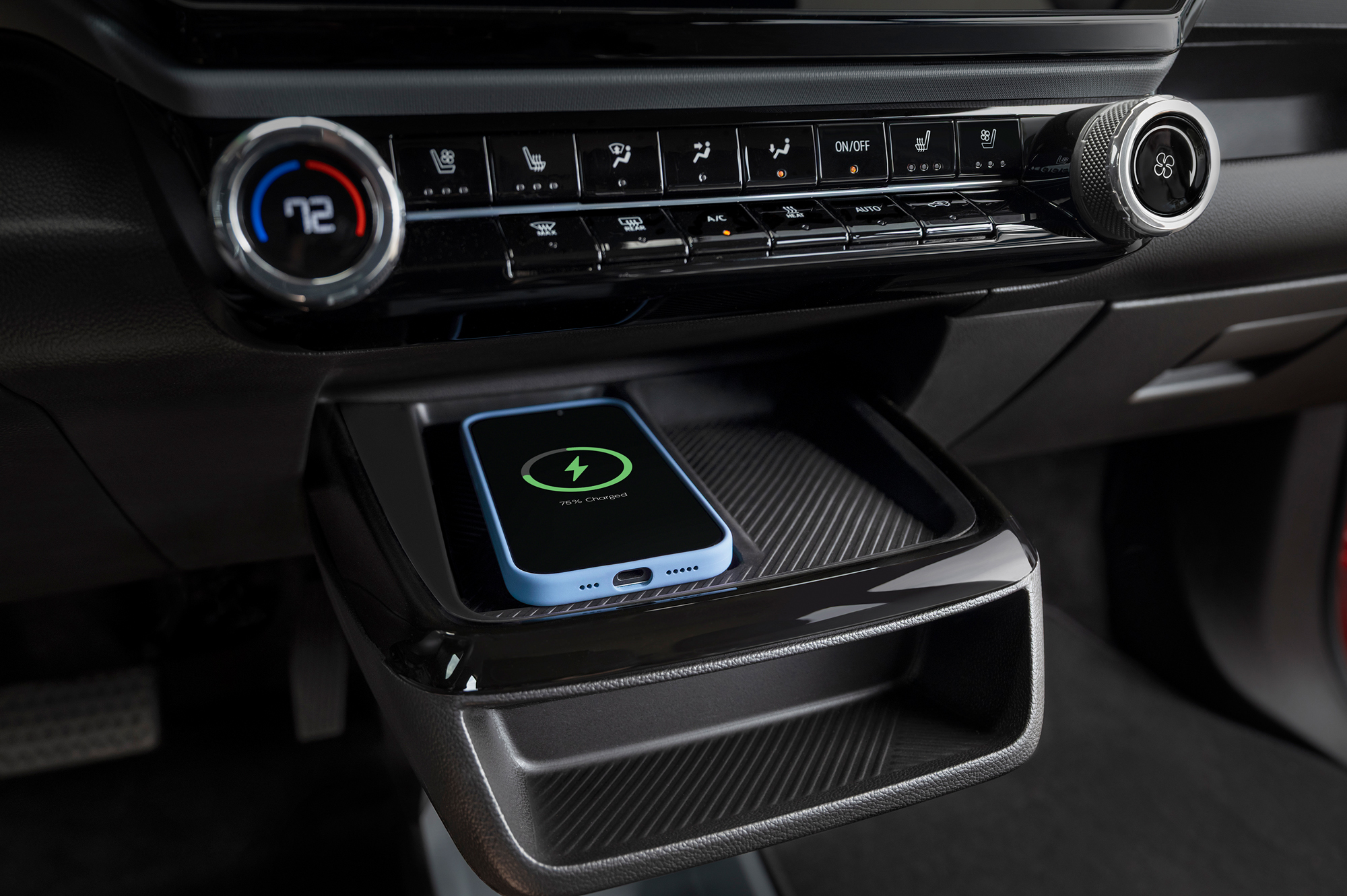
- Wireless charging pad with phone
-

- Rear cargo area with hatchback open.

-

- Native NACS Charging Port
-

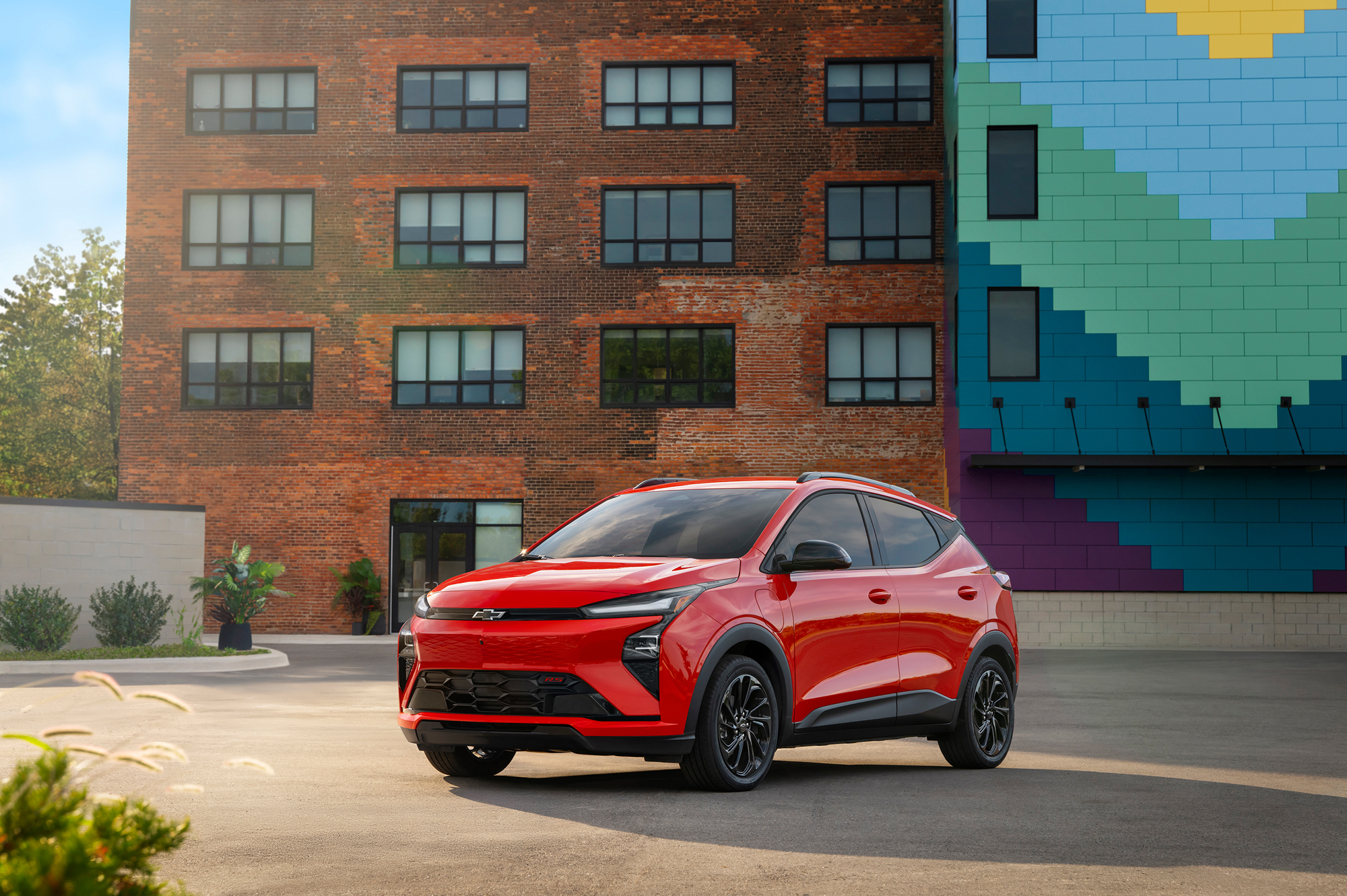
- Front 3/4 view of Bolt RS in Habanero Orange
-

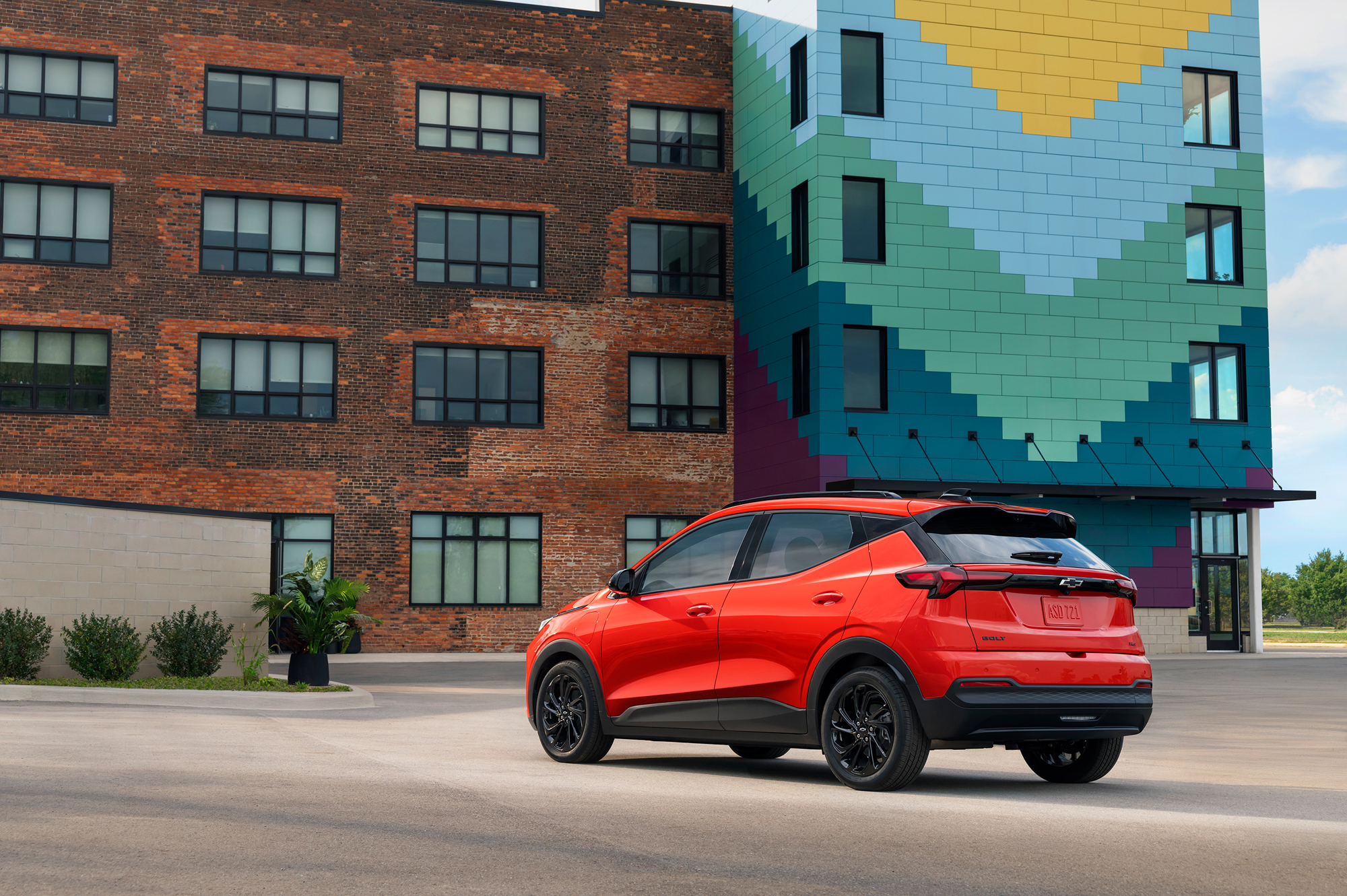
- Rear 3/4 view of the Bolt RS in Habanero Orange
-

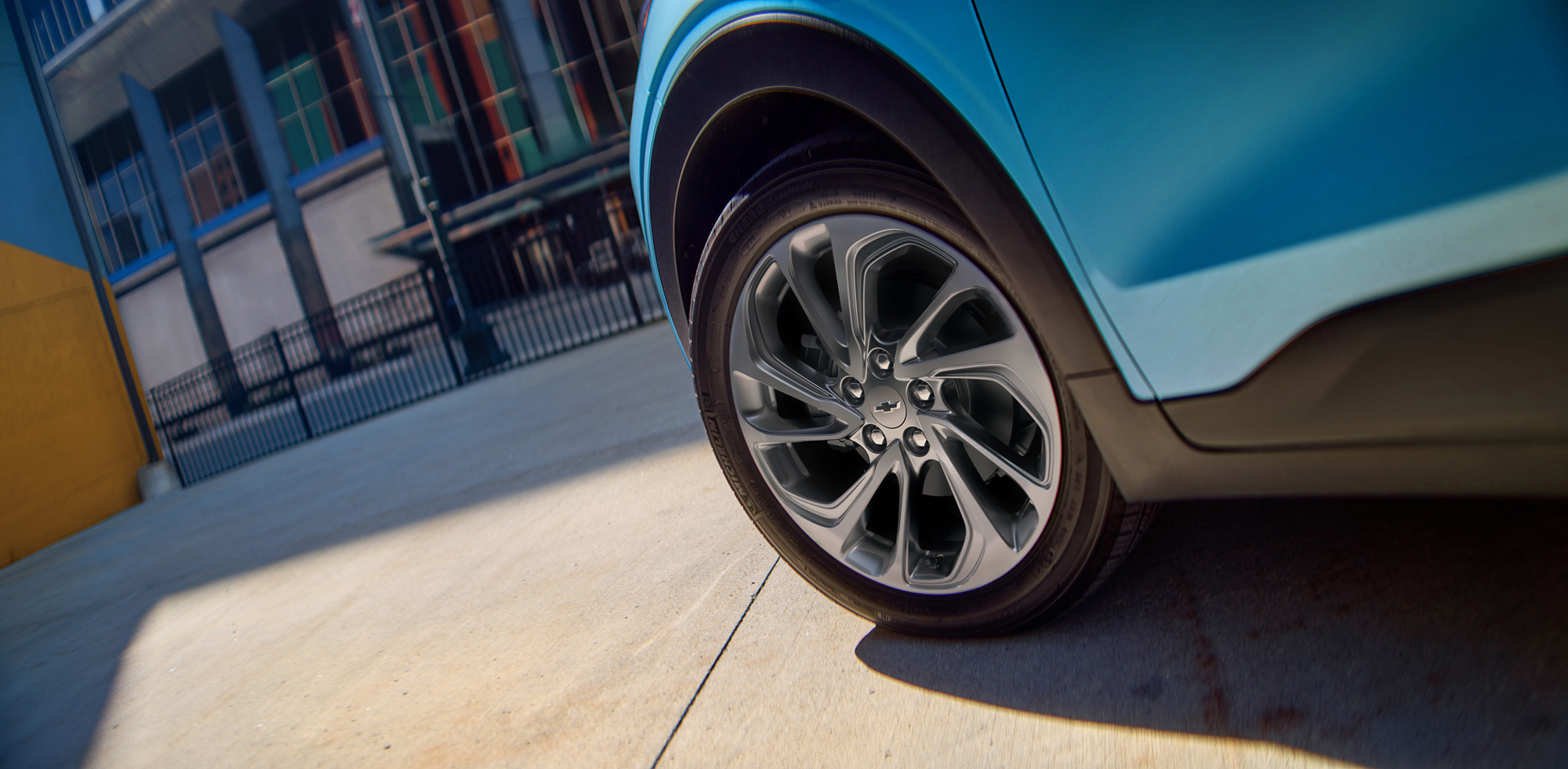
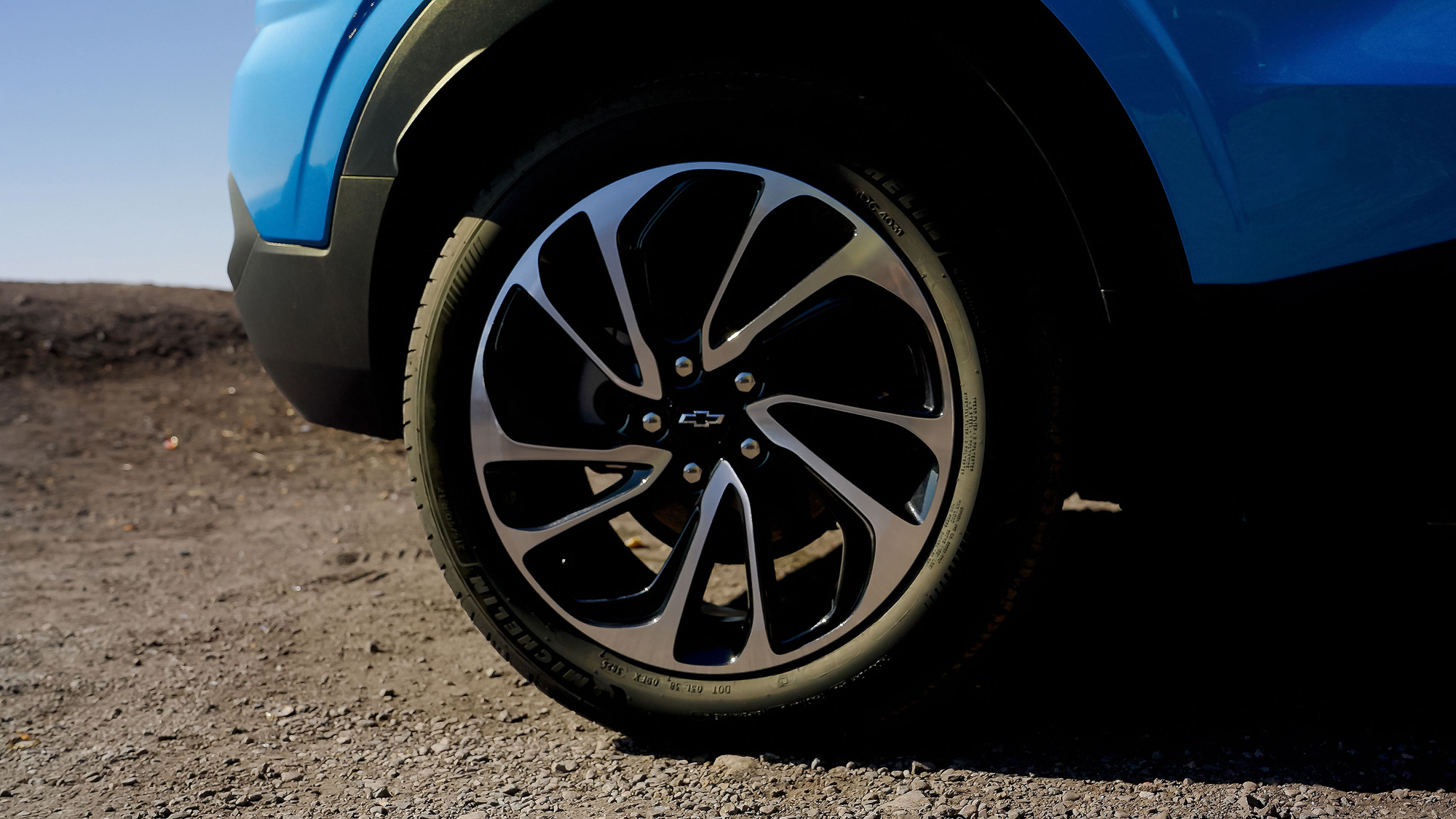
- 17-inch Alumninum Wheels
-

- Interior with 11″ driver information center and 11.3″ center infotainment screen
-

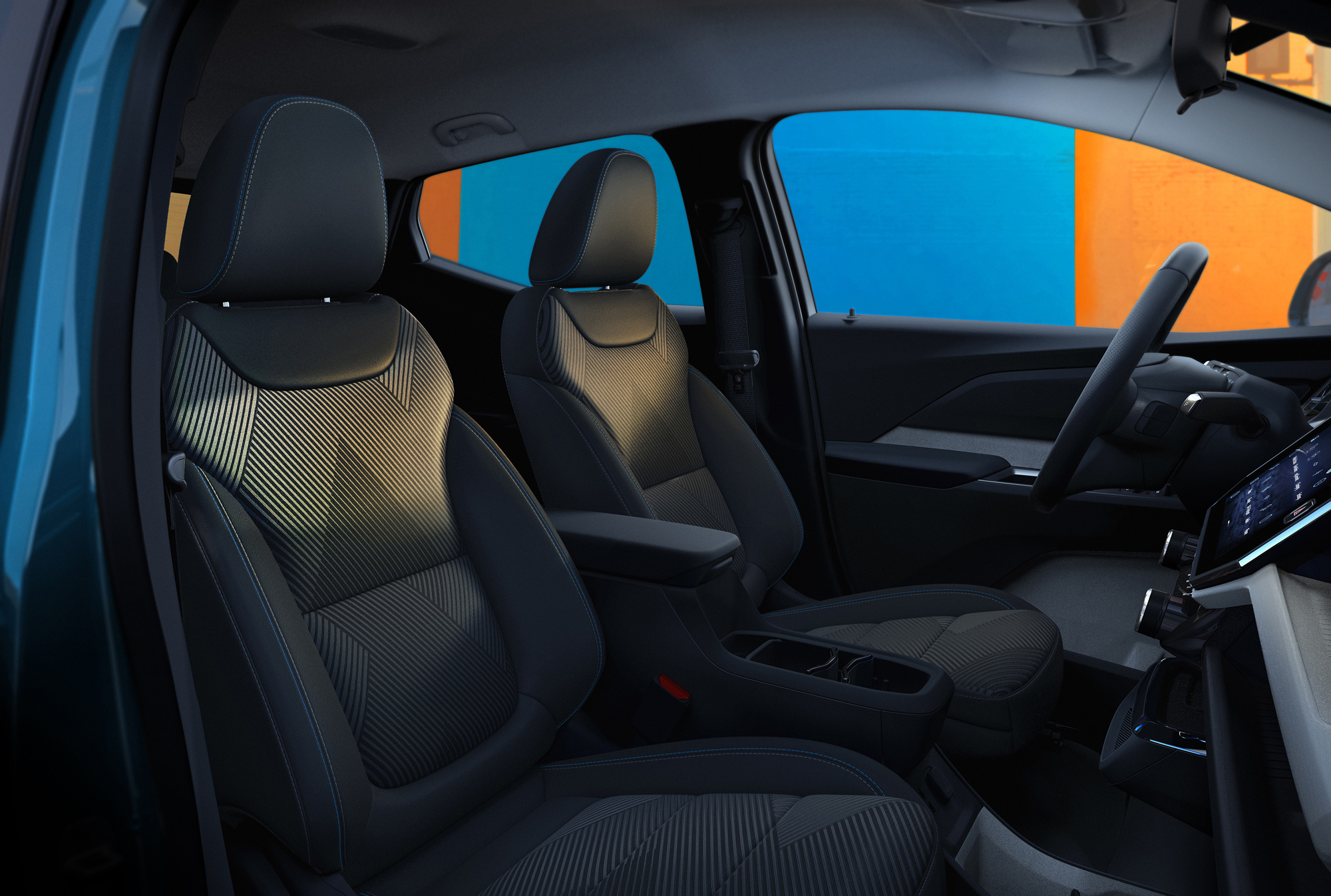
- Passenger side front interior view of the Bolt LT
-

- 2027 Chevrolet Bolt RS and LT
-

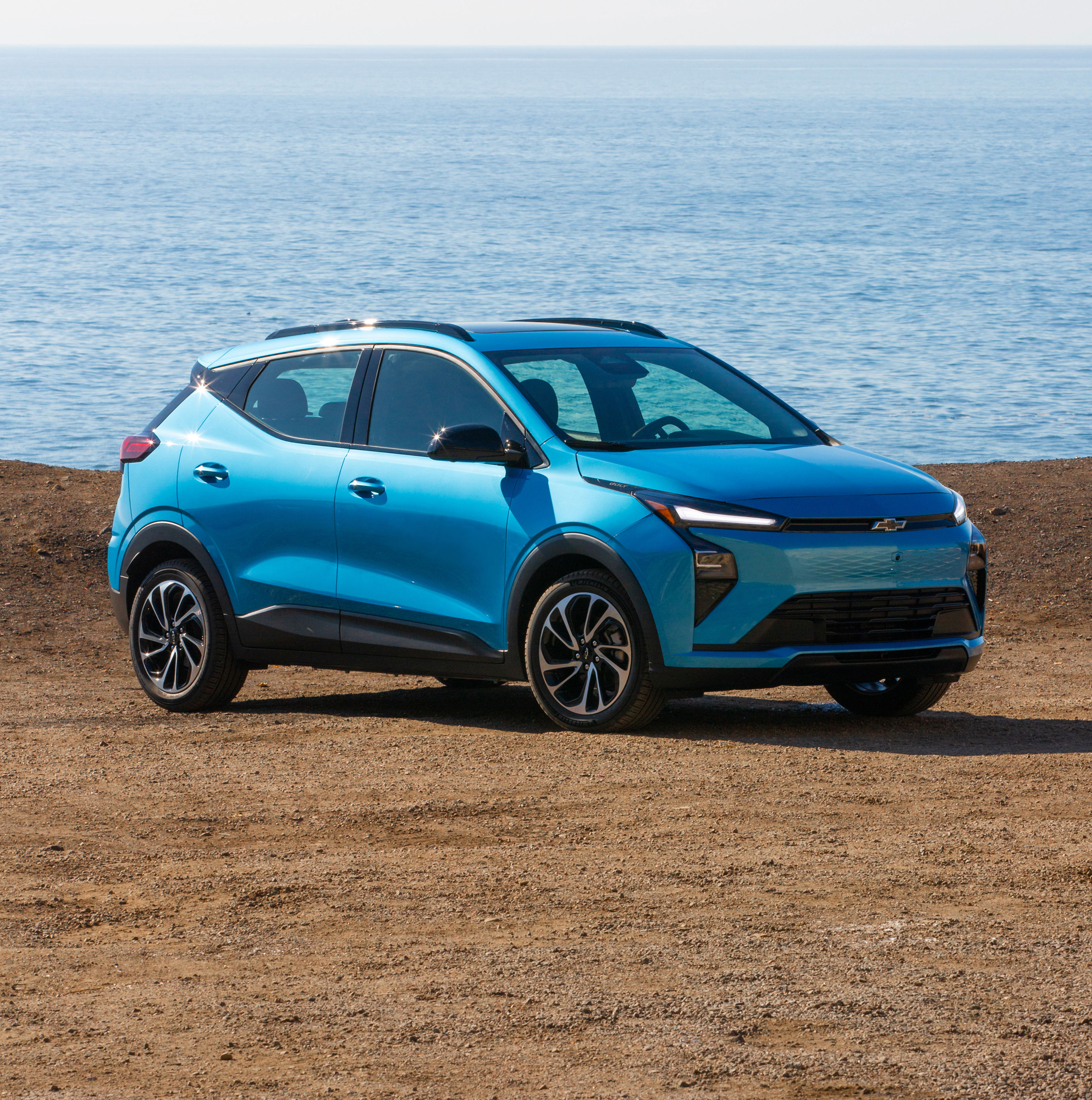
- Front 3/4 of the Bolt EV LT in Marina Blue
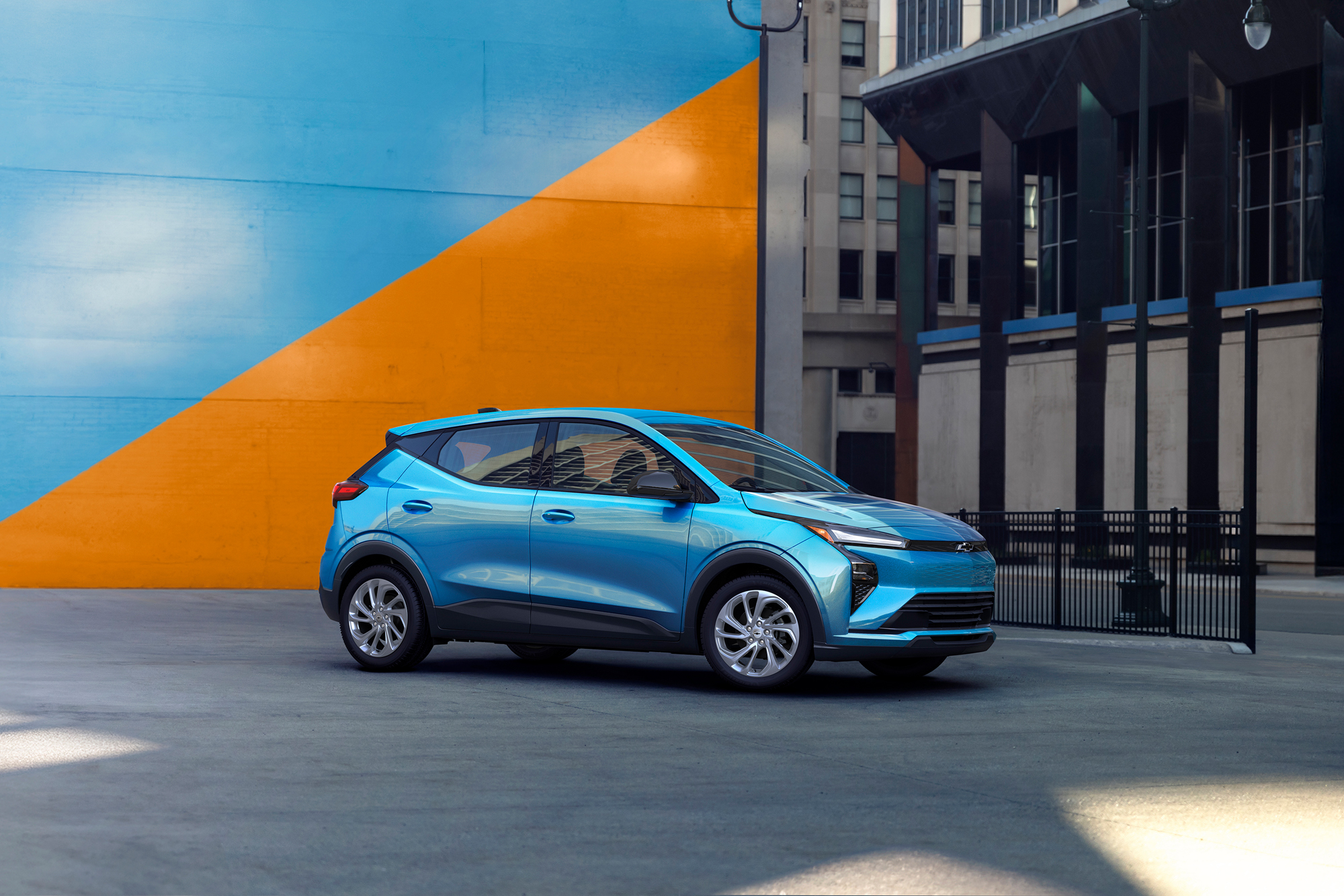
-

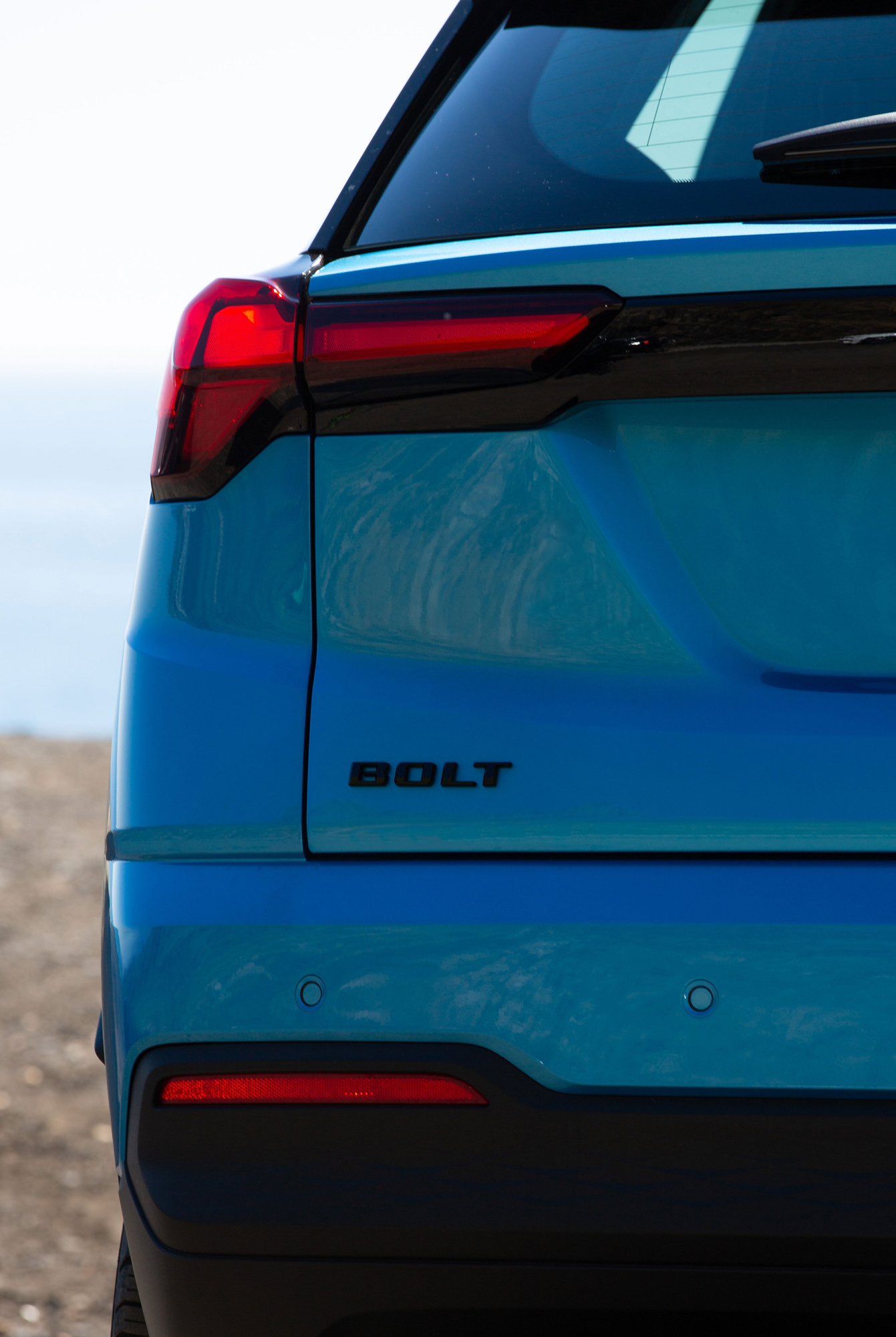
- Rear view of the Bolt EV LT in Marina Blue
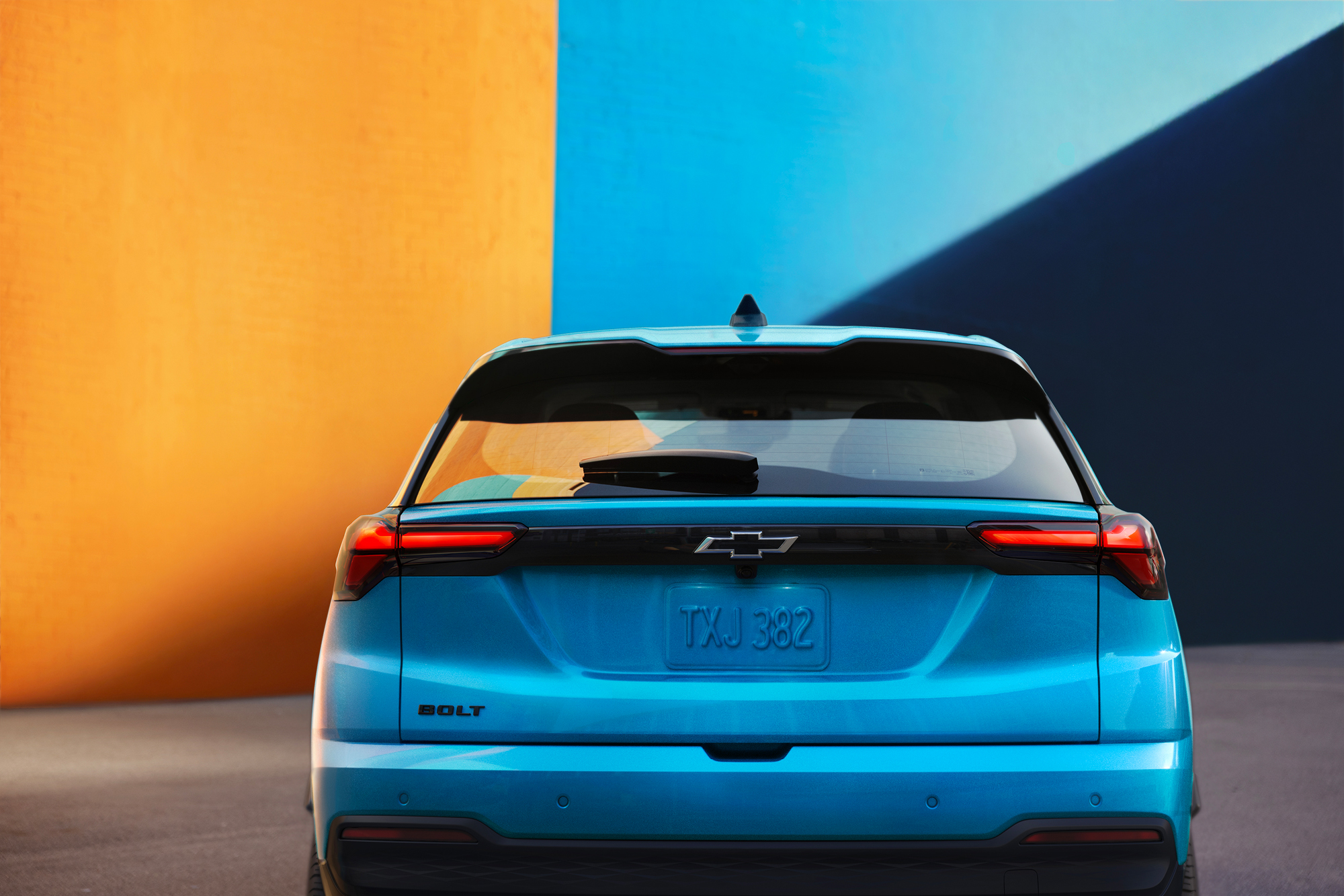
-

- Available Hands-free Super Cruise
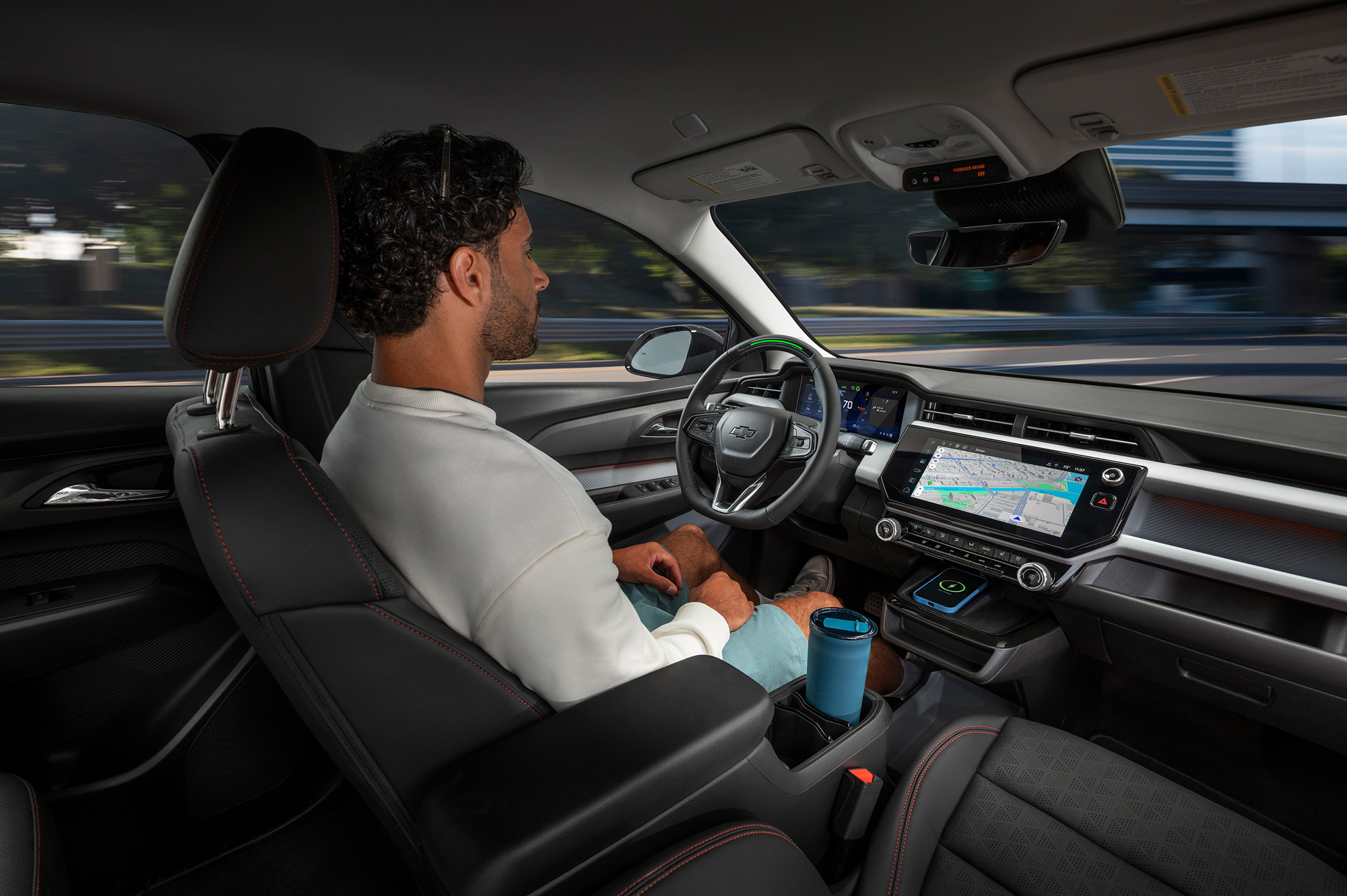
-

- Bolt RS exclusive interior with red stiching detail
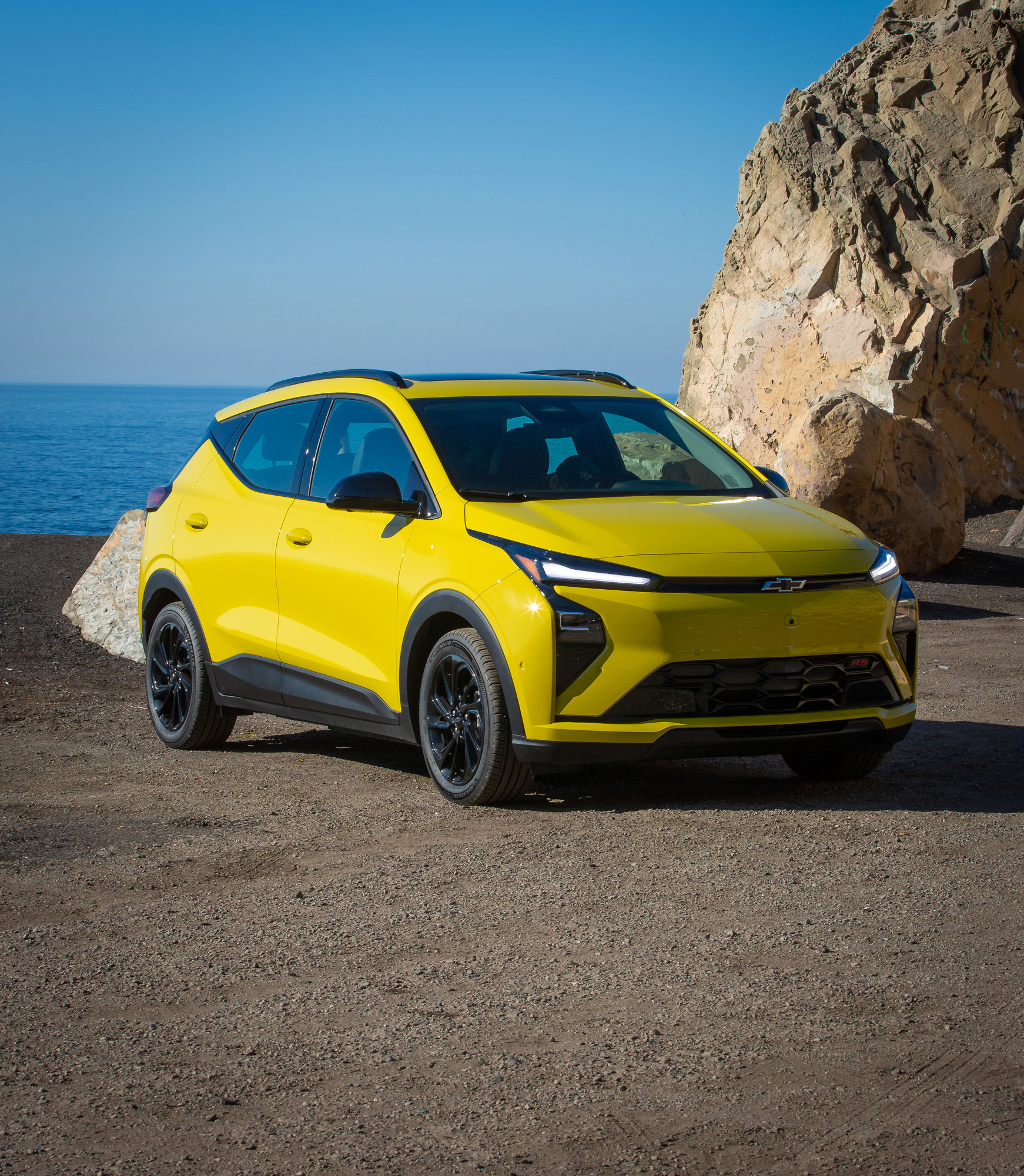


Greg was a writer for DriveTribe supporting Amazon's The Grand Tour and has been published in major publications across the country including the Los Angeles Times, the Cleveland Plain Dealer and the Atlanta Journal-Constitution. He was also a contributor to Chicken Soup for the NASCAR Soul, published in 2010, and the Christmas edition in 2016. He wrote as the NASCAR, Formula 1, Auto Reviews and National Veterans Affairs Examiner for Examiner.com and has appeared on Fox News. He holds a BS degree in communications, a Masters degree in psychology. He is currently the weekend Motorsports Editor for Autoweek and a regular contributor to Forbes.
- Caraganza Review 2027 Chevy Bolt: Rolling up to a mailbox near you - October 18, 2026
- Verstappen goes full Max in Singapore - October 11, 2026
- Caraganza Review 2025 Infiniti QX80: Massages, Mood Lighting, and Momentary Delusion - October 11, 2026


Greg Engle
Latest posts by Greg Engle (see all)
- Caraganza Review 2027 Chevy Bolt: Rolling up to a mailbox near you - October 18, 2026
- Verstappen goes full Max in Singapore - October 11, 2026
- Caraganza Review 2025 Infiniti QX80: Massages, Mood Lighting, and Momentary Delusion - October 11, 2026
- Caraganza First Drive Review 2026 Subaru Trailseeker: The Outback Has Gone Electric - October 4, 2026